

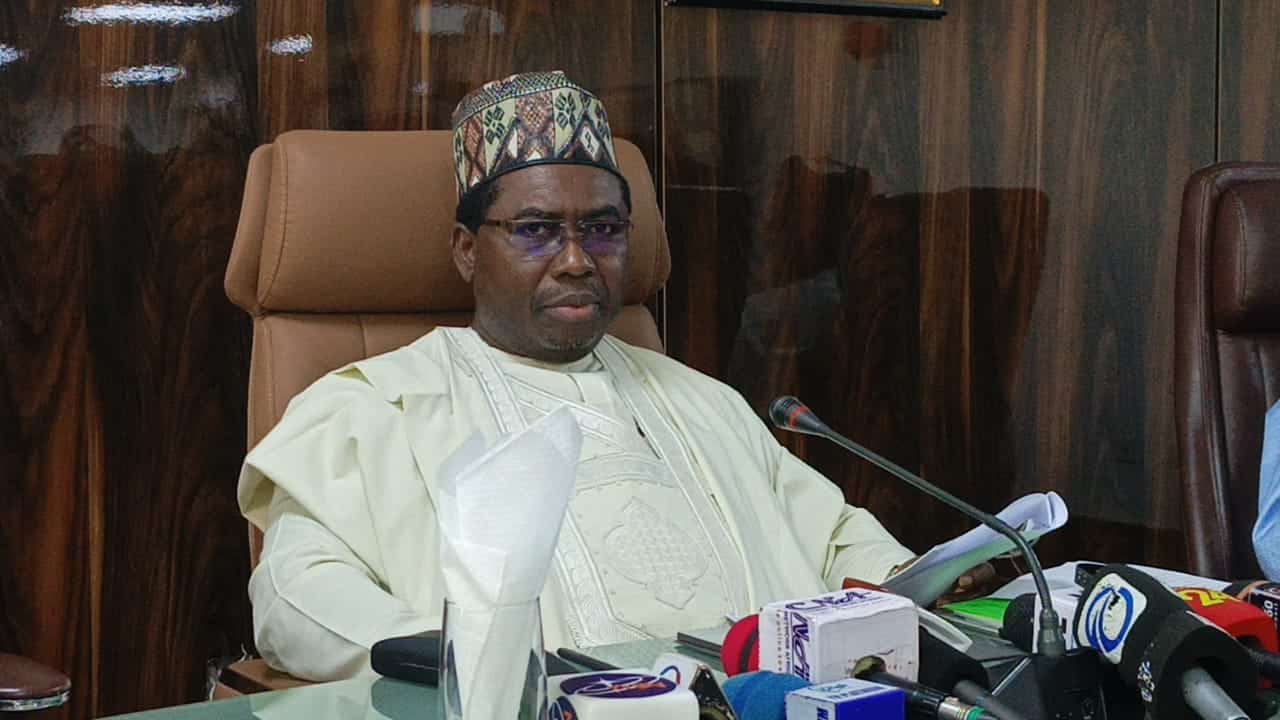
The Chairman of the Independent National Electoral Commission (INEC), Professor Joash Amupitan, has announced a sweeping review of regulations guiding political parties in Nigeria ahead of the 2027 general elections.
Speaking on Tuesday during a consultative meeting with leaders of political parties in INEC Abuja headquarters, Amupitan said the newly drafted INEC Regulations and Guidelines for Political Parties 2026 are designed to strengthen transparency, fairness, and accountability in the country’s electoral process.
According to him, the new guidelines replace the 2022 regulations and align fully with the provisions of the recently enacted .
“We cannot navigate a 2027 horizon using a 2022 map,” the INEC chairman said, stressing that the reforms were necessary to improve the credibility of Nigeria’s electoral system.
Amupitan explained that credible elections begin long before election day, noting that transparency in the processes that produce party candidates is critical to restoring public trust in the democratic process.
He disclosed that the commission had conducted a technical review exercise earlier in the month, leading to a clause-by-clause realignment of the regulations to ensure they are legally and operationally consistent with the new electoral law.
The INEC chairman also confirmed that the presidential and National Assembly elections will hold on January 16, 2027, while governorship and state assembly elections are scheduled for February 6, 2027.
Amupitan said the revised regulations cover several critical aspects of political party operations, including party registration and mergers, the conduct of party primaries, campaign activities, and political financing.
He warned that the commission intends to end what he described as the era of opaque party primaries that often lead to the imposition of candidates and widespread litigation after elections.
According to him, the new rules also establish clearer standards for campaign spending and election expenses by political parties, in line with Section 93(2) of the Electoral Act 2026, which empowers INEC to determine such expenses in consultation with political parties.
The regulations further outline procedures for the conduct of political rallies and campaigns to ensure peaceful participation while protecting the rights of citizens.
Amupitan added that provisions have also been included on the circumstances under which political parties may be deregistered, noting that the process will be implemented fairly and in accordance with the law.
He said the review was guided by findings from the Political Party Performance Index, a diagnostic tool developed with support from the , which revealed gaps between party constitutions and their actual practices at the grassroots level.
The INEC chairman also noted that the new regulations incorporate measurable benchmarks to improve the participation of women, youths, and persons with disabilities in party activities and electoral processes.
Calling on political party leaders to engage constructively with the draft guidelines, Amupitan said the consultation was intended to create an electoral framework that reflects the aspirations of Nigerians.
He reiterated that INEC remains a neutral umpire but will not remain passive in the face of actions that undermine democratic values.
“We are protecting the sovereign will of the Nigerian people from the point of nomination to the final declaration of results,” he said.
Amupitan urged party leaders to study the draft regulations and provide feedback, noting that collaboration between the electoral body and political actors is essential to building a credible electoral system ahead of the 2027 elections.


