

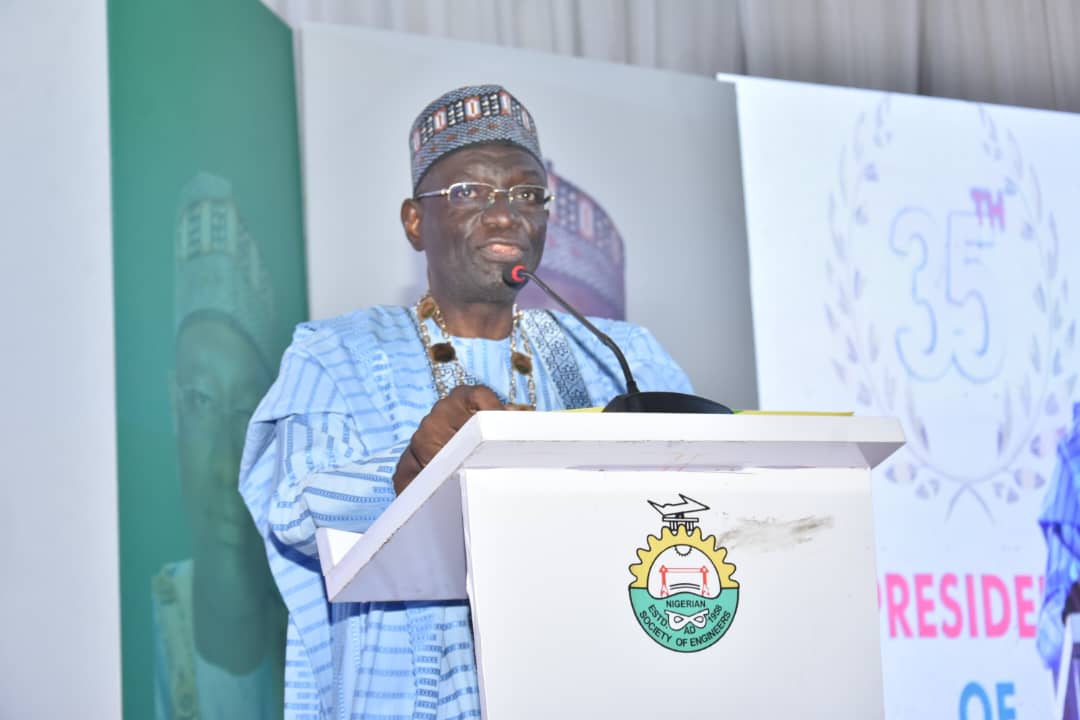
The Nigerian Society of Engineers (NSE) has renewed its call on the Federal Government to fully implement the Buy Nigeria First policy as a strategy to accelerate economic recovery and boost local productivity.
The appeal was made on Saturday at the Presidential Villa, Abuja, during the investiture of Engineer Ali Rabiu as the 35th President of the Nigerian Society of Engineers.
In his inaugural address, Engr. Rabiu urged the Presidency to enforce the policy by mandating the engagement of competent Nigerian consultants in the design, supervision, and certification of all public projects valued above ₦500 million.
He also commended the Federal Government for its recent announcement on the upgrade and inauguration of 38 technical colleges, describing the move as bold and timely in rebuilding Nigeria’s skills base.
According to him, the initiative, which falls under the national education reform agenda, is commendable not only for its scale but for its focus on equipping young Nigerians with globally competitive, industry-relevant skills that meet both local needs and international standards.
Engr. Rabiu added that the NSE is ready to collaborate with the Federal Government to ensure the sustainability and long-term impact of the programme.

Several dignitaries attended the investiture, including Senator Anyim Pius Anyim, who represented former President Goodluck Jonathan, GCFR; Senator Patrick Ndubueze, representing Senate President Godswill Akpabio; and the Minister of Regional Development, Engr. Abubakar Momoh, among others.
Former President Goodluck Jonathan, in his remarks, called on the new NSE leadership to strengthen Engineering Regulation Monitoring (ERM) to address the recurring cases of building collapse nationwide. He also urged closer collaboration with relevant authorities to curb quackery in the engineering profession.

Similarly, Senate President Godswill Akpabio pledged the National Assembly’s support for the NSE, assuring lawmakers’ readiness to work with the Society to advance engineering development in Nigeria.
On his part, Engr. Abubakar Momoh described Engr. Rabiu’s emergence as president as timely, noting that it presents an opportunity to elevate professional standards and strengthen policy influence. He called on stakeholders across government, the private sector, academia, and development partners to support the new administration in deploying engineering expertise for effective governance, economic diversification, job creation, and national competitiveness.
Engr. Rabiu, a former President of the Council for the Regulation of Engineering in Nigeria (COREN), will serve a two-year term as NSE president. He succeeds Engr. Margaret Oguntala.


vvsoo3