

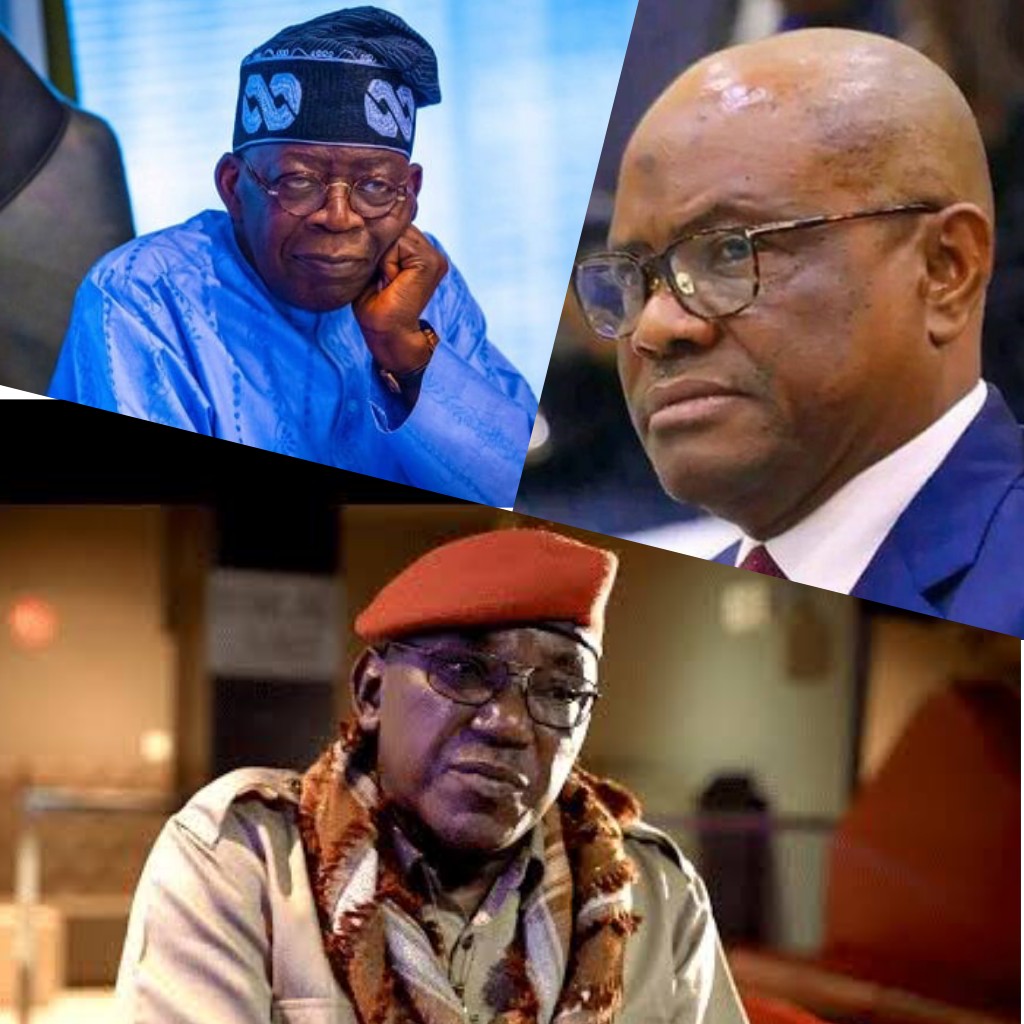
Nigeria’s Former Minister of Sports and Youth Development, Solomon Dalung, has warned President Bola Ahmed Tinubu against sidelining the Minister of the Federal Capital Territory (FCT), Nyesom Wike, describing such a move as a major political blunder.
Dalung gave the warning during a recent interview on Naija Unfiltered by Symfoni, where which he examined the internal contradictions of the Tinubu government, party loyalty, and the realities of Nigerian power politics. According to him, Wike remains one of the strongest political pillars sustaining the current administration, regardless of criticisms from within the ruling All Progressives Congress (APC).
Dalung argued that Nigerian politics is not driven by ideology or party discipline but by political utility and power balance, stressing that Wike’s value to Tinubu lies in his political influence rather than party background.
“If Tinubu bows to pressure and drops Wike, it will be one of the biggest political mistakes of his presidency,” Dalung said.
He explained that Wike’s role in the 2023 elections went beyond party lines, noting that his political machinery helped weaken opposition strongholds and stabilise Tinubu’s victory in critical regions.
Dalung dismissed claims that Wike’s continued presence in government undermines APC unity, arguing that many political actors now attacking Wike lack comparable electoral value.
According to him, the same politicians calling for Wike’s removal were silent when political alliances were formed to win power, but now demand ideological purity after victory has been secured.
He further accused some APC leaders of hypocrisy, insisting that Tinubu’s administration itself is a coalition government built on political compromises.
Dalung also touched on governance, stating that Wike’s aggressive administrative style in the FCT, while controversial, reflects Tinubu’s broader approach to power consolidation.
He warned that sacrificing a key ally like Wike to appease internal party interests could expose the presidency to unnecessary instability, especially at a time of growing economic hardship and public discontent.
Dalung stressed that Tinubu must prioritise political survival and control over internal party sentiments, noting that history has shown Nigerian presidents often fall when they mismanage alliances.
He concluded by advising the president to focus on governance outcomes and political pragmatism rather than elite pressure, warning that power in Nigeria rewards loyalty and strength, not moral posturing.


6nbnbk