

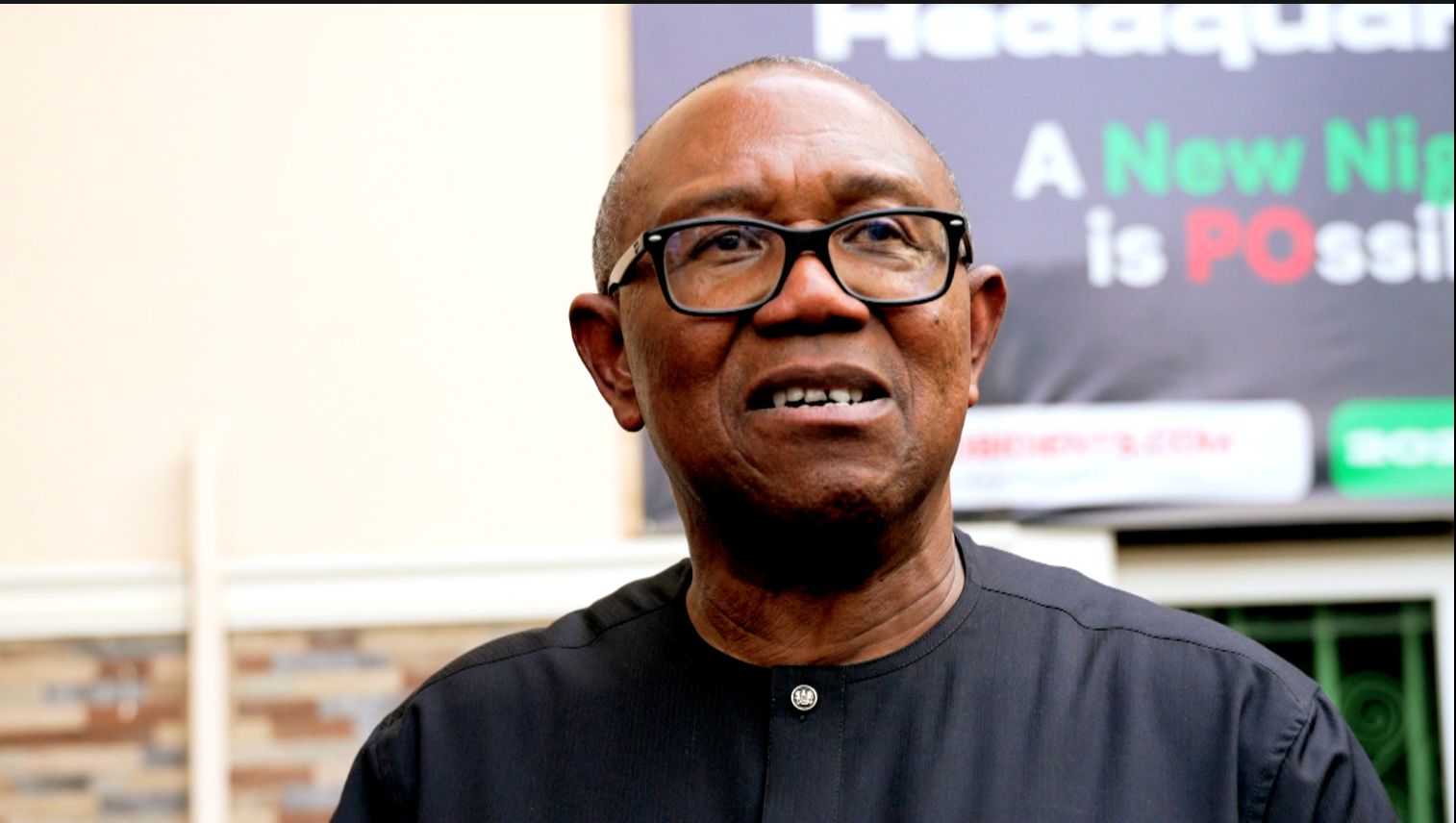
Former Labour Party presidential candidate, Mr. Peter Obi, has clarified that the Obedient Movement does not engage in abuse, name-calling, or divisive politics, insisting that its focus remains unity, issue-based engagement, and the pursuit of good governance in Nigeria.
Speaking on recent political developments and internal disagreements within opposition circles, Obi said the movement has consistently maintained a culture of respect and civility, contrary to claims suggesting otherwise.
According to him, neither he nor those who identify with the Obedient Movement promote personal attacks in politics.
“You don’t see us calling anybody bad names. We are not asking for division. I personally have never called anybody a bad name, and I will never do so,” Obi said.
He explained that political differences are normal in a democracy, but stressed that such disagreements should be resolved through dialogue rather than hostility. Obi added that members of political coalitions, including the African Democratic Congress (ADC), deserve mutual respect, noting that he maintains cordial relationships with party leaders and stakeholders.
Obi urged political actors to shift attention away from internal conflicts and focus on Nigeria’s pressing challenges, including widespread hunger, rising unemployment, insecurity, and the growing number of out-of-school children.
“Nigerians are being kidnapped in churches, mosques, and everywhere. That should be our preoccupation,” he stated.
The former Anambra State governor also suggested that repeated attempts to portray the Obedient Movement negatively are deliberate efforts to weaken its influence ahead of future elections. He described the movement as a nationwide force made up largely of youths, professionals, and technocrats committed to changing Nigeria’s political culture.
Another Obedient leader reaffirmed his belief in coalition politics, explaining that his engagements across parties are driven by the national interest rather than personal ambition. According to him, broader alliances remain necessary to address Nigeria’s deepening socio-economic challenges.
He called on political groups seeking electoral success to recognise and harness the strength of the Obedient Movement rather than dismiss it, describing the movement as a critical driver of political change across the country.
At its core, he said, the Obedient Movement is a demand for accountable leadership and good governance, not a quest for power at all costs.
“We are not begging for good governance; we are demanding it,” he concluded.


