

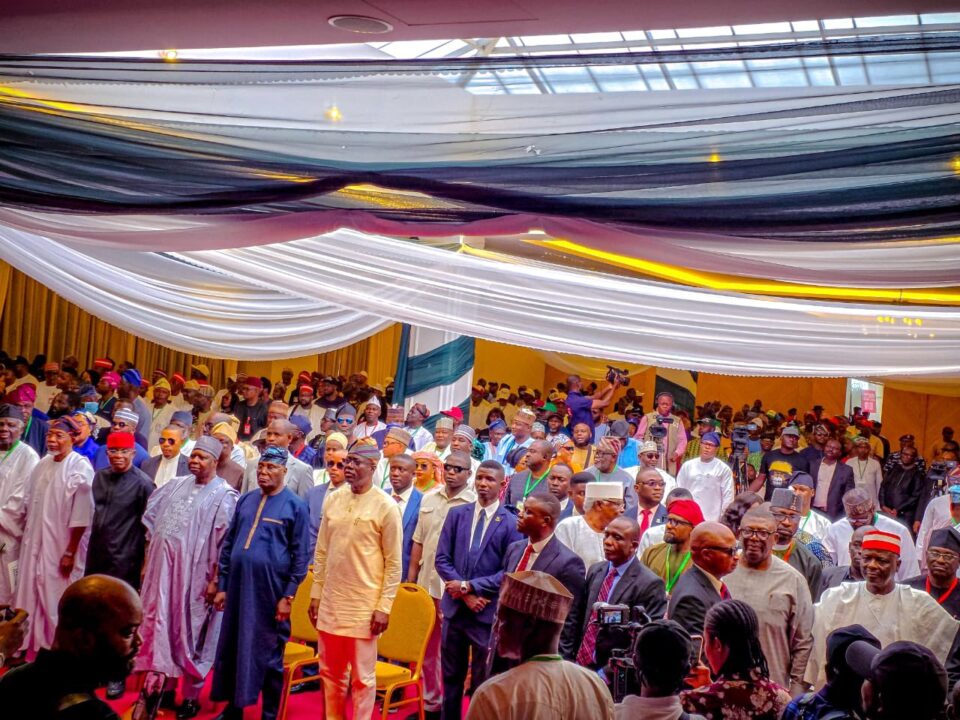
A deepening crisis has emerged within Nigeria’s opposition bloc as factions of the Peoples Democratic Party (PDP), Labour Party (LP), African Democratic Congress (ADC), and Accord Party have distanced themselves from the recent Ibadan opposition summit, rejecting its resolutions and legitimacy.
The high-profile meeting, held in Ibadan, Oyo State, brought together prominent political figures including Atiku Abubakar, Peter Obi, Rabiu Kwankwaso, and Seyi Makinde. The gathering had proposed a united opposition front with a single presidential candidate to challenge Bola Tinubu in the 2027 general elections.
However, multiple party factions have now disowned the summit, exposing sharp internal divisions and casting doubt on any immediate coalition prospects.
The PDP faction aligned with Nyesom Wike dismissed the meeting as illegitimate, describing its organisers as “impostors.” The party’s National Publicity Secretary, Jungudo Mohammed, insisted that those who attended did not represent the official PDP structure and were restricted by court orders.
According to the Wike-backed leadership, the PDP has not entered into any coalition talks and will independently field its own presidential candidate in 2027. The faction further argued that any credible opposition alliance must be led by the PDP as the dominant opposition platform.
Similarly, divisions within the ADC became evident as two separate factions rejected participation in the summit. A bloc linked to the party’s 2023 presidential candidate, Dumebi Kachikwu, clarified it neither attended nor endorsed the meeting. Another faction led by Nafiu Gombe also disowned the resolutions, insisting the party would pursue its independent electoral path.
The Labour Party, under its Interim National Chairman, Nenadi Usman, also distanced itself from the Ibadan gathering. The party stated that its current focus is internal restructuring ahead of its convention, noting that any future coalition decision would be formally communicated.
In the same vein, the Accord Party, led by Chris Imumolen, strongly rejected any association with the summit. The party accused organisers of unauthorised use of its name and symbol, describing the act as political impersonation. It issued a 48-hour ultimatum demanding an explanation and threatened legal action.
Despite the backlash, the summit’s organisers had warned against what they described as attempts by the ruling party to turn Nigeria into a one-party state. They pledged to resist such moves and push for a unified opposition candidate.
The controversy also triggered a strong response from the ruling All Progressives Congress (APC). The party condemned Governor Seyi Makinde over his reference to “Operation Wetie,” a violent political episode in Nigeria’s history tied to the Operation Wetie. The APC described the remarks as inciting and unfit for a sitting governor.
In a statement by its National Publicity Secretary, Felix Morka, the APC argued that the opposition lacks cohesion and credibility, stating that parties unable to manage internal crises cannot present a viable alternative government.
The Ibadan summit was initially seen as a potential turning point for opposition unity ahead of 2027. Instead, it has exposed entrenched factionalism, legal disputes, and leadership struggles across major parties.
With each bloc now reaffirming plans to field separate candidates, the likelihood of a unified opposition challenge against President Tinubu appears increasingly uncertain, setting the stage for a fragmented and highly competitive 2027 election.


