

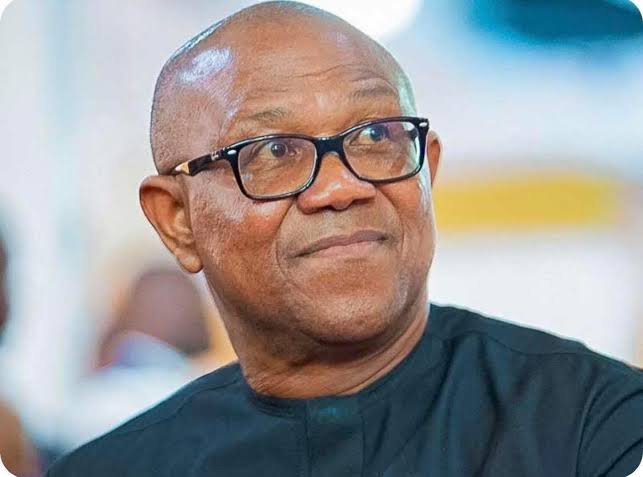
The Nigeria Democratic Congress (NDC) presidential candidate, Peter Obi, has outlined his vision for building a productive and prosperous Nigeria, promising sweeping reforms in education, healthcare, and human capital development if elected president.
In a statement released on July 1, 2026, Obi recalled his decision to seek Nigeria’s presidency, saying his ambition was driven by a commitment to place the country on the path of unity and national transformation.
He said that over the coming weeks and months, he would present a comprehensive roadmap aimed at reducing abuse in government, improving Nigerians’ quality of life, and fostering unity, peace, sustainable progress, and prosperity.
According to Obi, his proposed agenda is built on the principles of unity, inclusion, social justice, equity, and the freedom of every Nigerian to pursue lawful aspirations.
The former Anambra State governor identified education and healthcare as the cornerstone of his development agenda, describing human capital as the most critical infrastructure required for national progress.
Obi pledged that, if elected, one of the first steps of his administration would be the establishment of a task force to drastically reduce the number of out-of-school children across the country.
He also promised to prioritise Technical and Vocational Education and Training (TVET), arguing that Nigeria’s industrialisation depends on developing a skilled workforce capable of driving agricultural processing and value addition through industrial parks across the country’s geopolitical zones.
According to him, strengthening TVET institutions through increased funding and partnerships involving government, the private sector, and faith-based educational organisations would create apprenticeship opportunities similar to Germany’s dual education system.
Obi lamented the paradox of high unemployment alongside the shortage of skilled labour, which he said has compelled many Nigerian entrepreneurs to establish businesses outside the country.
He argued that addressing the skills gap would help Nigeria transition from a consumption-driven economy to a production-oriented economy capable of creating jobs and expanding industrial output.
The NDC presidential candidate also proposed greater emphasis on character and civic education, saying values such as trust, integrity, and shared national identity are essential for effective leadership, enterprise, and national cohesion.
He said these reforms would form part of a broader governance framework designed to strengthen institutions and promote inclusive national development.


Mình thường dùng cricify tv apk download vào cuối tuần để giải trí cùng bạn bè. TONY08-18