

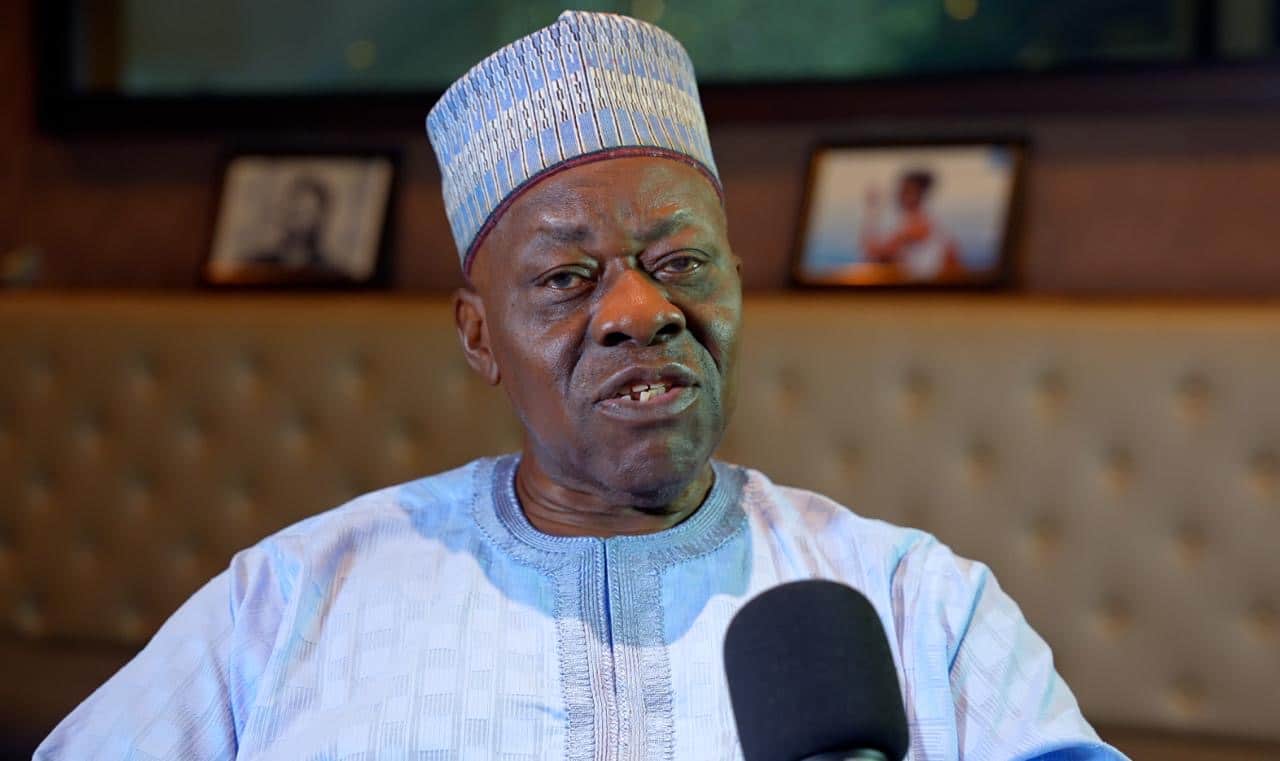
Political analyst and Professor of Political Science at Ahmadu Bello University (ABU), Zaria, Prof. Jibrin Ibrahim, has claimed that President Bola Tinubu is aware that many Nigerians would not vote for him in the 2027 general elections, alleging that the administration is resorting to the use of state institutions to weaken opposition parties ahead of the polls.
Ibrahim made the remarks during an interview on Naija Unfiltered on Symfoni TV, where he assessed the Tinubu administration’s performance on the economy, security, governance, corruption, democracy and preparations for the 2027 elections.
Describing the administration as a failure, Ibrahim argued that it had not fulfilled the promises it made to Nigerians during the 2023 electioneering campaign.
“My sense is that this government has been a failure. What it had promised to deliver, it has failed to deliver, and as the elections approach, I think the time has come for Nigerians to clearly show this government that failure cannot be rewarded,” he said.
On the 2027 general election, the professor alleged that President Tinubu was conscious of growing public dissatisfaction with his administration.
“President Tinubu is very conscious of the fact that he has produced so much misery for Nigerians that Nigerians cannot vote for him in 2027. With the knowledge that he will lose the 2027 election, he is now recklessly using the abuse of presidential powers to stop opposition parties from contesting against him,” Ibrahim alleged.
He further claimed that attempts to weaken opposition parties through political and judicial means posed a serious threat to Nigeria’s democracy.
“If President Tinubu succeeds in blocking opposition from contesting against him, that means there is zero democracy in Nigeria,” he said.
On the economy, Ibrahim argued that the administration was unprepared for major reforms such as the removal of fuel subsidy and the floating of the naira, saying the policies imposed severe hardship on Nigerians without adequate palliatives.
He also criticised the rising cost of living, noting that promised compressed natural gas (CNG) transport initiatives had yet to significantly ease transportation costs three years after they were announced.
Speaking on insecurity, the political analyst maintained that the government had failed to improve the nation’s security situation despite campaign promises, adding that violent crimes had spread to more parts of the country.
Although he described the APC’s Renewed Hope Agenda as a well-written manifesto with sound policy proposals, Ibrahim argued that the administration lacked the commitment and focus required to implement it.
He also accused the government of failing to effectively combat corruption, alleging that reports of graft continue to emerge across ministries, departments and agencies.
Commenting on allegations involving the President’s Chief of Staff, Femi Gbajabiamila, Ibrahim argued that any investigation should be independent and transparent, adding that the official should step aside during the probe to avoid any perceived conflict of interest. The Presidency has denied wrongdoing in relation to the allegations and directed the Independent Corrupt Practices and Other Related Offences Commission (ICPC) to investigate the matter.
The professor further criticised the National Assembly, alleging that it had become overly compliant with the executive and was no longer providing effective constitutional checks and balances.
He also expressed concern about what he described as growing executive influence over sections of the judiciary, while commending judges whom he said had continued to uphold judicial independence.
Ibrahim raised concerns over what he described as a shrinking democratic space, citing the arrest and prosecution of journalists and opposition figures as signs of increasing authoritarian tendencies.
Referring to reports of alleged unbudgeted government expenditure, he argued that the development reflected what he described as the administration’s disregard for due process in public procurement.
Responding to comments by Labour Party presidential candidate Peter Obi alleging that his life was under threat, Ibrahim said such claims, if true, would be deeply troubling for Nigeria’s democracy.
While acknowledging that opposition parties had failed to unite behind a single presidential candidate, he maintained that they still stand a realistic chance of defeating the ruling All Progressives Congress (APC) in the 2027 election.
He also criticised the Attorney-General of the Federation over what he described as partisan involvement in politically sensitive litigation, arguing that the office should remain neutral and defend the rule of law.
On the Independent National Electoral Commission (INEC), Ibrahim questioned public perceptions of the electoral body’s neutrality and urged Nigerians to closely monitor preparations for the 2027 general election.
The political scientist further argued that constitutional checks and balances were under increasing pressure, warning that the country’s democratic institutions must be protected from what he described as executive overreach.
On the proposed establishment of state police, Ibrahim said that although he supports federalism in principle, he does not believe the current model of state policing would effectively address Nigeria’s security challenges because of concerns over possible abuse by state governments.
He concluded by urging Nigerians to defend democratic institutions and hold political leaders accountable through constitutional and democratic means as the country prepares for the 2027 general elections.


