

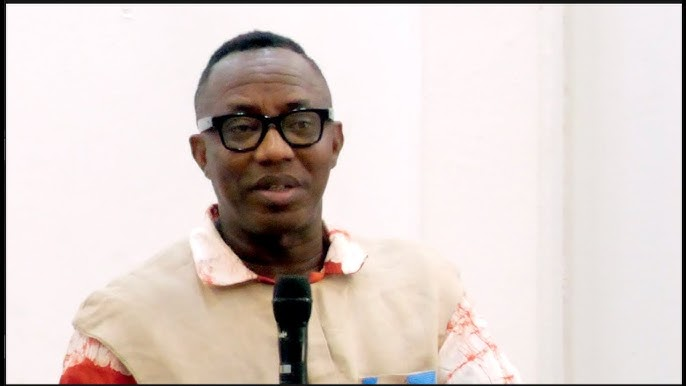
Human rights activist and former presidential candidate, Omoyele Sowore, has launched a blistering attack on the Nigerian state, accusing it of sustained repression, abuse of power, and fear of dissent, while declaring art, music, and digital creativity as modern weapons of resistance against oppression.
Sowore made the remarks while delivering a keynote address titled “The Drum Dimension and the Art of Resistance” at an end-of-year gathering of activists, artists, and civil society actors in Abuja.
In a speech that blended history, politics, and culture, the Sahara Reporters founder likened modern Nigeria to a post-plantation society still driven by exploitation, surveillance, and intimidation, arguing that the instruments of resistance have merely evolved, not disappeared.
Sowore commended Amnesty International for what he described as its “consistent leadership in the struggle for justice in Nigeria,” while alleging that state-backed actors now target the organisation through coordinated online attacks.
“Anything Amnesty posts, they mobilise people into rooms in Abuja to attack its integrity,” Sowore said. “They have changed tactics—from fake street protests to digital assassination—but they will never get away with it.”
He described such actions as evidence of a state deeply uncomfortable with accountability and global scrutiny.
The activist also narrated a fresh case of alleged police abuse, revealing that he arrived late at the event after intervening at a police station in Garki, Abuja, where a woman was detained following a domestic dispute.
According to Sowore, the woman’s husband had used his influence to petition the police to recover a car from his wife, despite the fact that they had three children together.
“That matter should never have reached a police station,” Sowore said, adding that he told officers involved that their conduct reflected a lack of legitimate policing priorities.

Tracing resistance back to the era of slavery, Sowore described the drum as the earliest political technology of oppressed people, noting that colonial authorities across Africa banned drums because they feared their power as tools of communication and rebellion.
“The drum was not entertainment,” he said. “It was language, memory, and strategy. It coordinated escapes, uprisings, and revolts.”
He referenced historical resistance movements such as the Stono Rebellion and the Haitian Revolution, noting that even when drums were confiscated, enslaved people turned their bodies into instruments of resistance.
“The body became the drum,” he said. “That was not survival. That was political resistance.”
Sowore argued that modern resistance has shifted into digital space, describing computers, music software, and online platforms as today’s equivalent of talking drums.
“Today, the computer is the new drum,” he declared. “You no longer need permission from a studio, a label, or a gatekeeper. Anyone with a laptop can create, record, and distribute resistance.”
He cited hip-hop, electronic music, and protest anthems as cultural expressions born from poverty, injustice, racism, and police violence, stressing that they are not accidental trends but deliberate forms of rebellion.
Describing music as a weapon rather than decoration, Sowore said it plays a critical role in sustaining movements when hope is exhausted and speech is dangerous.
“Music collapses fear,” he said, invoking the legacy of Afrobeat pioneer Fela Anikulapo-Kuti. “When people chant and sing together, repression loses its power to isolate.”
He referenced freedom songs, anti-apartheid anthems, and #EndSARS protest music as examples of how sound transforms crowds into collective political force.
“In resistance, music is coordination, healing, and defiance made audible,” he added.
Beyond sound, Sowore said resistance has become visual and performative, pointing to graffiti, murals, banners, and unarmed protesters standing before armoured forces as modern political art.
“When a wall speaks, power listens,” he said. “When art enters protest, demonstrations become movements.”
According to him, art reclaims public space, forces moral reckoning, and unsettles authority in ways traditional politics often cannot.
Sowore concluded by stressing that art builds community and collective identity, insisting that oppression can never fully succeed as long as people can create rhythm, symbols, and sound.
“Oppression may control weapons, but resistance controls space,” he said. “As long as people can make rhythm and create art, power will never win.”
RELATED TRENDS:
“WHO WILL TELL ATIKU ABUBAKAR THE TRUTH?” – SEP
He formally declared the event open with the words: “Aluta Continua. Victoria Ascerta.”
The speech was greeted with sustained applause from attendees, many of whom described it as a rallying call for artists, activists, and digital creators to reclaim their role at the centre of Nigeria’s resistance movement.


