

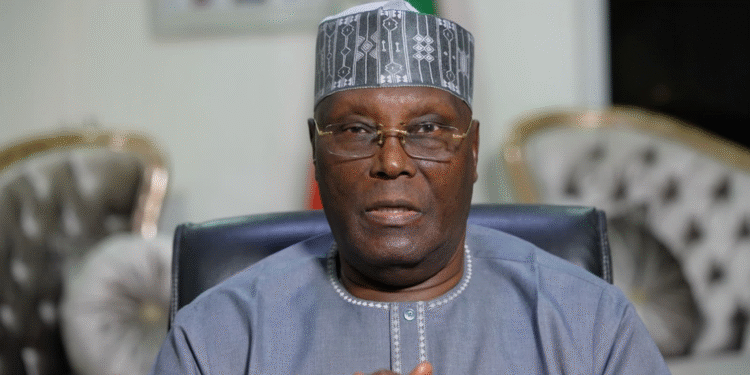
Nigeria is exhausted by promises. What people feel today is not confusion, but fatigue. Fatigue from reforms announced and abandoned, from leaders who arrive with noise and exit with excuses. In times like this, the most radical quality in leadership is not charm or novelty. It is the courage to stay and do the work.
This is where Atiku Abubakar stands apart.
Leadership in a broken system demands stamina. It demands the willingness to absorb criticism, resist distraction, and remain focused long after applause has faded. Atiku’s political journey, often reduced to ambition by critics, is better understood as an act of endurance. He has stayed in the arena long enough to understand its traps, its incentives, and its consequences for ordinary Nigerians.
Staying matters because Nigeria’s crisis is structural, not cosmetic. Inflation, insecurity, unemployment, and institutional decay cannot be fixed with slogans or viral moments. They require leaders who understand systems and are prepared for sustained engagement. Atiku’s insistence on restructuring and economic reform is not ideological stubbornness. It is realism.
There is also a human honesty in Atiku’s approach. He does not sell miracles. He speaks of hard choices, trade-offs, and patience. In a political culture addicted to easy lies, this alone is disruptive. Nigerians are tired, but they are not naïve. Many now recognize that progress will be slow, painful, and contested. What they seek is leadership that will not disappear halfway.
Atiku’s calm in the face of pressure is instructive. While others react to every provocation, he conserves energy. While distractions multiply, he stays anchored on ideas. This restraint is not weakness. It is preparedness. It signals a leader who understands that governing Nigeria requires emotional discipline as much as policy knowledge.
The African Democratic Congress, ADC, reflects this same seriousness. Building coalitions is not glamorous. It is tedious, frustrating, and often misunderstood. Yet it is the only path to durable reform in a fractured polity. Atiku’s willingness to invest in this process shows readiness to govern, not just to win.
The deeper truth is this. Nigeria does not need saviors who thrive on chaos. It needs leaders who can endure boredom, resistance, and slow progress without losing direction. It needs grit more than gimmicks.
Atiku Abubakar’s staying power is not about personal persistence. It is about refusing to abandon a country at a time when abandonment has become routine. In a season of political theatrics, the quiet decision to remain, prepared and focused, may be the strongest statement of leadership Nigeria has seen in years.
- Nze Amb. Ugo-Akpe Onwuka JP (Oyi)


You write with so much clarity and confidence. Impressive!
k6oquu