

Nigeria has signalled that further joint military strikes with the United States are likely, following a Christmas Day air bombardment targeting suspected ISIS-linked militants in the country’s northwest, an operation Abuja confirmed was conducted in collaboration with its armed forces.
The development comes amid Nigeria’s deepening and interconnected security crises across its northern regions. While jihadist groups have waged a deadly insurgency in the northeast since 2009, criminal bandit networks and extremist factions have increasingly destabilised the northwest through raids, kidnappings, and attacks on rural communities.
Nigeria’s military said the Christmas Day operation involved “precision strike operations against identified foreign ISIS-linked elements” in northwest Nigeria, describing it as a coordinated effort with US forces. The strikes followed heightened diplomatic engagement between Abuja and Washington, after former US President Donald Trump accused armed groups in Nigeria of mass killings of Christians, a framing strongly disputed by Nigerian authorities and independent analysts.
Despite rejecting claims that the violence amounts to religious persecution, the Nigerian government acknowledged that the controversy has intensified security cooperation between both countries.

Speaking on Channels Television, Nigeria’s Minister of Foreign Affairs, Yusuf Tuggar, disclosed that Nigeria provided the intelligence that led to the strikes and that he had been in direct communication with US Secretary of State Marco Rubio ahead of the operation.
Asked whether additional strikes should be expected, Tuggar replied: “It is an ongoing thing, and we are working with the US. We are working with other countries as well.”
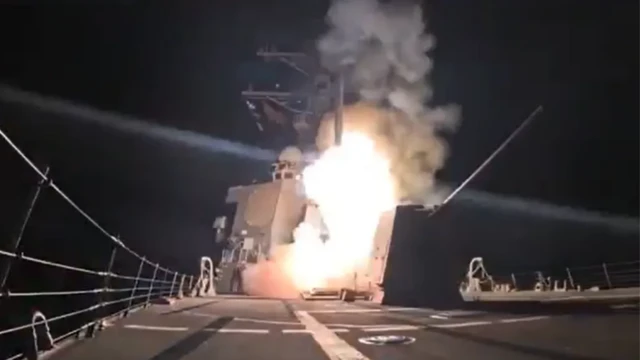
US Africa Command (AFRICOM) said “multiple ISIS terrorists” were killed in the operation, which it said took place in Sokoto State. US defence officials later released footage appearing to show a missile launch at night from a US naval vessel.
The strikes reportedly shocked residents in remote parts of Sokoto State, which borders Niger. Haruna Kallah, a resident of Jabo village in Tambuwal Local Government Area, said the explosion was terrifying.
“We heard a loud explosion which shook the whole town, and everyone was scared,” he said. “We initially thought it was an attack by Lakurawa, but later learnt it was a US drone attack. It surprised us because this area has never been a Lakurawa enclave, and we have not had attacks here in the last two years.”
The exact group targeted in the strikes remains unclear. While Nigeria’s jihadist activity has historically been concentrated in the northeast, extremist groups have increasingly expanded into the northwest. Researchers have linked some fighters from Lakurawa, a jihadist group operating in Sokoto State, to the Islamic State Sahel Province (ISSP), active mainly in Niger and Mali. However, those links are disputed, with analysts noting that the term “Lakurawa” is often used loosely to describe various armed factions in the region.
Some reports also suggest elements associated with Lakurawa maintain ties to the al-Qaeda-affiliated Jama’at Nusrat al-Islam wal-Muslimin (JNIM), a rival of ISSP, further complicating the security landscape.
While Abuja has publicly welcomed the strikes, analysts say Nigeria may have faced limited room to object. Malik Samuel, an Abuja-based researcher with Good Governance Africa, told AFP that diplomatic pressure played a role in Nigeria’s cooperation.
“I think Trump would not have accepted a ‘No’ from Nigeria,” Samuel said, noting that authorities are keen to demonstrate collaboration with Washington despite the fact that “both the perpetrators and the victims in the northwest are overwhelmingly Muslim.”
RELATED TRENDS:
‘Illegal, Unconstitutional’- Okonkwo Faults Tinubu’s Troop Deployment to Benin Republic
JUST IN: Trump Launches U.S. Airstrikes on ISIS in Nigeria Over Christian Genocide
Minister Tuggar confirmed that President Bola Ahmed Tinubu personally authorised the operation, stressing that it should not be interpreted through a religious lens.
“It must be made clear that it is a joint operation, and it is not targeting any religion nor simply in the name of one religion or the other,” Tuggar said.
As Nigeria continues to grapple with multiple armed threats across its territory, the confirmation of ongoing joint operations suggests a deeper phase of military cooperation with the United States, even as questions linger over targets, intelligence, and the long-term impact on local communities.


Comments 1