

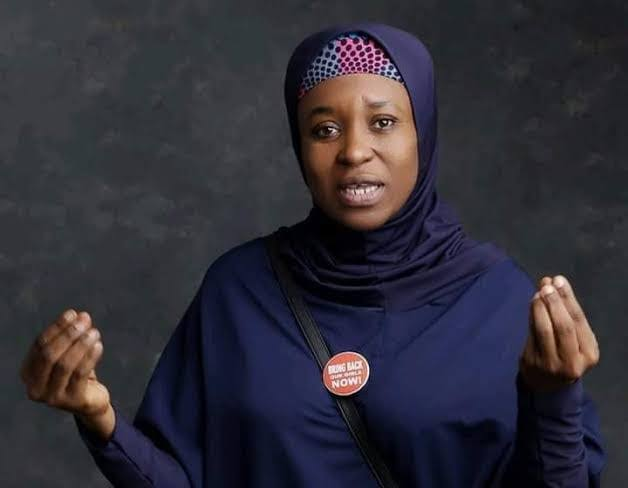
Activist Aisha Yesufu has issued a stark warning to Nigerians, stressing that politics determines every aspect of national life — including what happens to citizens even after their death. Speaking at a public forum on democratic participation, Yesufu argued that Nigerians must stop treating politics as a distant concept and recognise its direct impact on their present and future.
Yesufu said politics is not a mere abstract idea but the foundation upon which laws, governance and societal norms are built. According to her, citizens risk being controlled in life and death if they fail to engage. She vividly illustrated the extent of political influence by stating that in a dysfunctional system, “someone can wake up and introduce a law demanding the exhumation of buried bodies, and it becomes binding.” She described this as evidence that political decisions shape everything about society, whether people pay attention or not.
The activist lamented that while politicians spend years mastering political organisation, negotiation and coalition-building, ordinary citizens remain divided along ethnic, religious and sectional lines, weakening their ability to influence governance. She attributed this lack of civic consciousness to Nigeria’s long years of military rule, during which political education was absent, and obedience was demanded without question. That military culture, she said, still shadows today’s democracy.
Yesufu noted that Nigeria has now enjoyed 26 uninterrupted years of democratic governance, long enough for a new generation of citizens to emerge — people in their mid-20s who have known nothing but democracy. She insisted that this generation must not inherit the political ignorance of the past. She urged that political lessons begin from early childhood, enabling citizens to develop healthy political identities and a collective sense of responsibility.

She argued that if Nigerians understood how power works, they would be less divided and more united around issues of nationhood, development and statehood. Politics, she said, should serve as a tool for convergence, not division. She called for an end to the idea that political disagreements must lead to hostility, saying that matured democracies thrive on debate and consensus-building, not bitterness.
Yesufu added that the country can only move forward if its citizens recognise the need to come together—even when they differ in ideology—to protect democracy, demand accountability and promote national progress. She expressed hope that the event’s panel, drawn from different sectors including the legislature, judiciary, civil society, media and public institutions, would serve as an example of what constructive national dialogue should look like.
The activist concluded that teaching democratic values early, fostering unity and holding leaders accountable are essential for building a functional society. She maintained that Nigeria’s future depends on citizens who understand their political power and are willing to use it responsibly.


I like how you presented both sides of the argument fairly.