

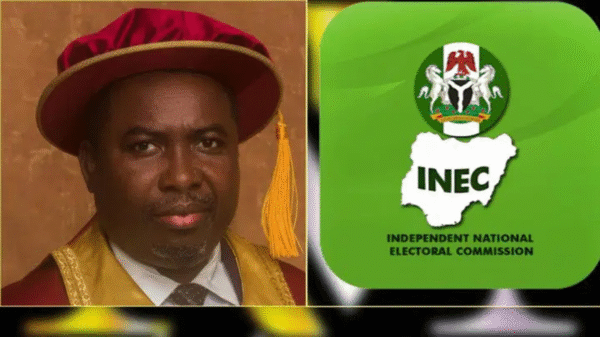
The Chairman of the Independent National Electoral Commission (INEC), Professor Joash Amupitan, SAN, has unveiled the Commission’s electoral timetable ahead of the 2026 elections to hold in the Federal Capital Territory (FCT) and other parts of the country, alongside plans for a nationwide “Voter Revalidation Exercise” aimed at cleaning up Nigeria’s voter register.
Speaking at his first quarterly consultative meeting with Civil Society Organisations (CSOs) in Abuja on Wednesday, February 4th at the INEC headquarter, Prof. Amupitan said the planned exercise was necessitated by persistent challenges affecting the credibility of the voters’ register, including under-age registration, multiple registrations, and the continued presence of deceased persons.
Nigeria’s voter register currently contains about 93 million names. According to the INEC Chairman, restoring public confidence in the electoral process requires a register that voters and stakeholders can trust.
“No electoral process can command public confidence without trust in the integrity of its voters’ register,” he highlighted.
However, while the intention to sanitise the register appears administratively sound, the proposed use of the term “revalidation” has raised legal and constitutional questions among election observers and civil society groups.

Senate Rejects Bill on Electronic Transmission of Election Results
Under Section 10(1) of the Electoral Act 2022, INEC is required to maintain a National Register of Voters through a system of Continuous Voter Registration (CVR). The Act also empowers the Commission, under Section 10(4), to update and revise the register as necessary. The law, however, does not expressly provide for a process described as “revalidation,” which typically implies that already-registered voters must take additional steps to confirm their eligibility.
Legal experts may therefore question whether INEC can lawfully compel citizens who are already validly registered and in possession of Permanent Voters Cards to undergo any form of revalidation as a condition for voting in future elections. Critics argue that introducing such a requirement could amount to an extra-legal hurdle not contemplated by the 1999 Constitution, which guarantees the right to vote to all Nigerian citizens aged 18 and above who are registered.
Beyond preparations for 2027, the INEC Chairman outlined a packed electoral schedule for 2026. On February 21, the Commission will conduct the FCT Area Council elections, involving about 1.6 million voters across 2,822 polling units. Bye-elections are also scheduled for the same day in Rivers and Kano States. This will be followed by the Ekiti State governorship election on June 20 and the Osun State governorship election on August 8.
Prof. Amupitan also disclosed that 171 political parties have applied for registration. While many failed to meet constitutional requirements, he said successful associations would be announced in due course.
He concluded by calling on civil society groups to help address rising voter apathy, particularly evident in recent off-cycle elections. He urged increased voter education, greater inclusion of women in the electoral process, and warned political actors against hate speech, vote buying, and other practices capable of undermining confidence in Nigeria’s democracy as the 2027 elections draw closer.
FOLLOW US ON X @ Symfoni (@SymfoniNews) / Posts / …X · SymfoniNews1K+ followers


Comments 1