

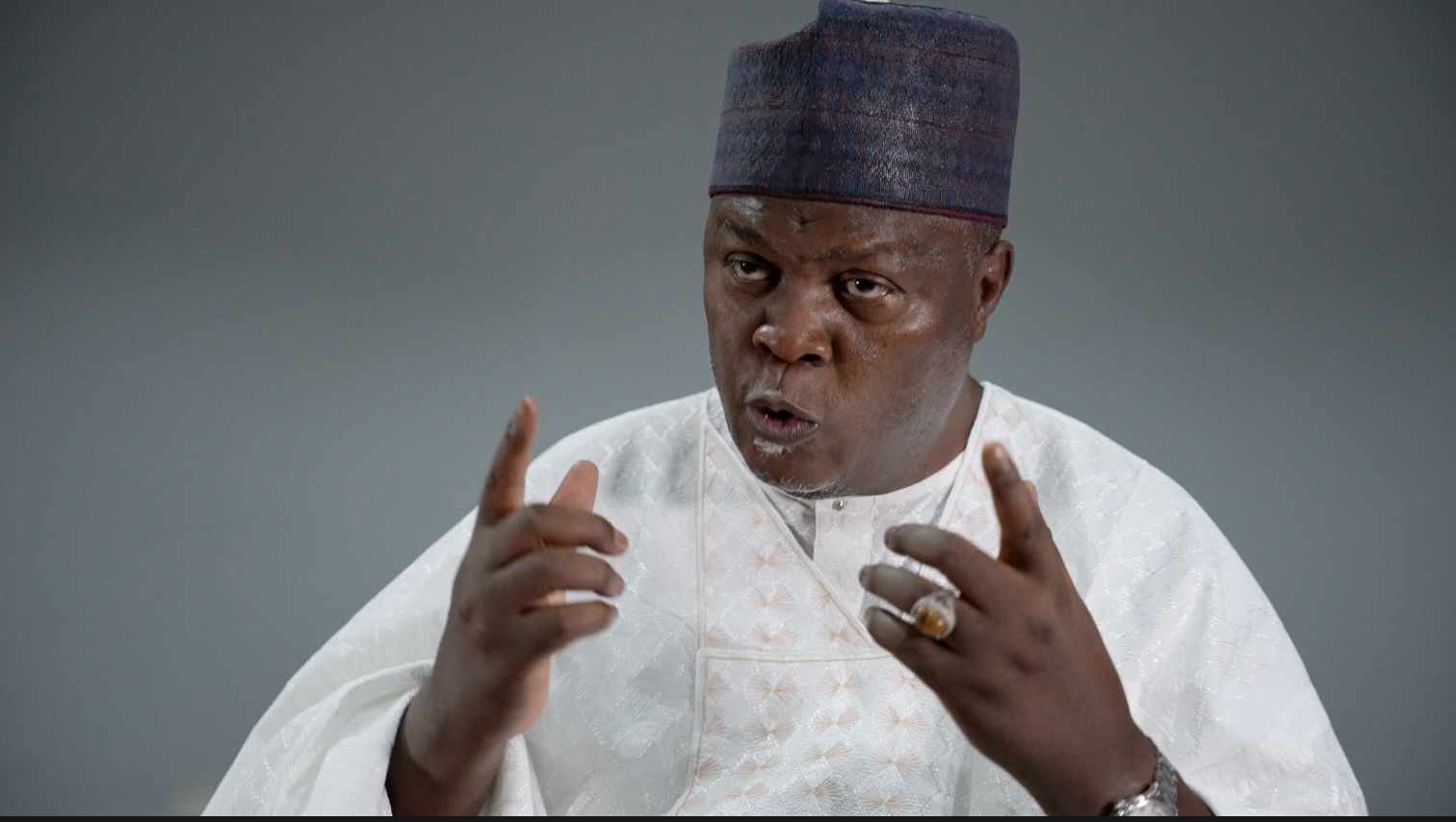
A chieftain of the opposition (PDP), Alhaji Sani Umar, has alleged that sent the Minister of the Federal Capital Territory, , to destabilize the PDP and other opposition parties in Nigeria.
Umar made the claim while speaking during a political interview on the ongoing leadership crisis within the PDP.
According to him, the internal conflicts currently affecting the party are not ordinary disagreements but part of a broader political strategy aimed at weakening opposition parties ahead of future elections.
He claimed that Wike’s actions within the PDP have contributed significantly to the party’s instability.
“Knowing Wike and understanding him, you will agree with me that he is not someone who easily calls for a truce because he likes to fight,” Umar said. “For him to now talk about truce shows they also know they have no legitimacy and no authority.”

The PDP chieftain argued that the crisis within the party has created a leadership vacuum, particularly within the National Working Committee (NWC), which is responsible for the day-to-day administration of the party.
According to him, both factions involved in the dispute currently lack the legal authority to claim leadership of the party’s NWC following recent court decisions.
“As we speak today, we don’t have a National Working Committee and they also don’t have one,” Umar said. “Both sides have no leadership in that regard.”
He explained that although the NWC leadership structure is currently unclear, the PDP still remains a functioning political party because other key organs of the party are still in place.
These include the Board of Trustees (BoT) and the National Executive Committee (NEC), which he said continue to provide direction for the party.
“The party still exists. We have the Board of Trustees and the National Executive Committee. What we lack right now is the National Working Committee,” he stated.
Umar said the Board of Trustees has already stepped in to try to address the crisis and find a solution that will bring the rival factions together.
According to him, the party leadership decided to pursue reconciliation instead of continuing legal battles that could drag on for months.
He explained that one option considered by the party was to challenge the court ruling at the , but the idea was dropped due to time constraints.
Umar said the party feared that waiting for a Supreme Court judgment might delay preparations for upcoming political activities, including party primaries.
“We had three options before us,” he said. “One was to go to the Supreme Court, another was to convene a meeting of the NEC to form a caretaker committee, and the third option was to reconcile with our brothers in the interest of the party.”
He said the party eventually chose reconciliation because of the need to prepare for upcoming political processes.
Umar also raised concerns about the state of Nigeria’s judicial system, alleging that the judiciary has recently come under pressure and criticism.
According to him, many Nigerians have lost confidence in some judicial decisions.
“Our judicial integrity is at its lowest level,” he said. “Nigerians may not all be lawyers, but they know when a judgment is right and when it is wrong.”
He argued that some court rulings have created the impression that the judiciary is no longer fully independent, warning that such perceptions could weaken democratic institutions in the country.
Umar further claimed that the current political environment has allowed the executive, legislature, and judiciary to increasingly align with one another, a situation he said could undermine democratic accountability.
Despite the crisis, the PDP chieftain expressed hope that the party would eventually resolve its internal disputes and emerge stronger.


