

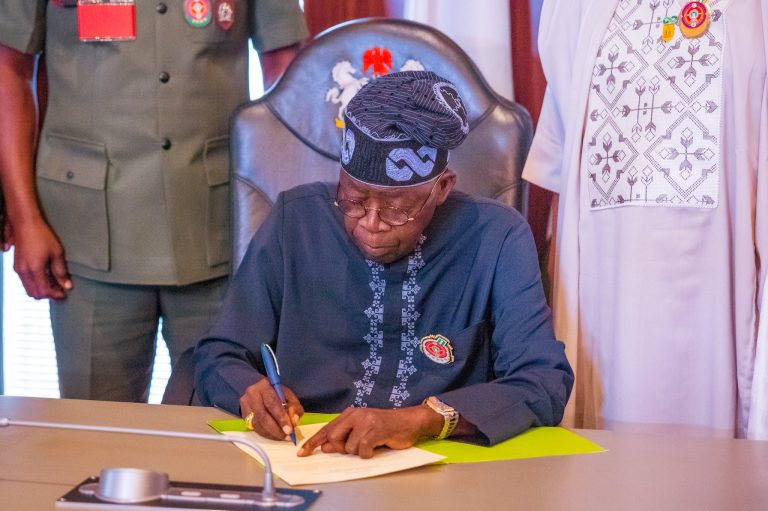
Nigeria’s President, Bola Ahmed Tinubu, has signed into law a fresh set of amendments to the country’s electoral framework, setting the stage for the 2027 general elections.
The signing ceremony took place at the Presidential Villa in Abuja on Wednesday, coming just days after the Independent National Electoral Commission (INEC) released the official timetable for the next nationwide polls.
The new law has reignited national debate over the method of transmitting election results from polling units, an issue that dominated controversy during the 2023 general elections. At the centre of the amendment is the question of electronic transmission of results.
During the 2023 elections, the INEC Result Viewing Portal (IReV) allegedly experienced technical disruptions, sparking widespread allegations of manipulation and eroding public trust in the electoral process.
Civil society organisations and opposition parties have continued to push for mandatory real-time electronic transmission of results directly from polling units, arguing that it is the most effective way to prevent tampering. However, supporters of the ruling All Progressives Congress (APC) insist that Nigeria’s uneven internet coverage, especially in rural communities, makes a hybrid system—combining electronic upload with manual backup—more realistic.
The disagreement has already spilled into the streets. Last week, protesters stormed the National Assembly complex in Abuja, demanding that real-time digital transmission of election results be made compulsory in the new law to guarantee transparency and credibility.
INEC has already unveiled a timetable outlining the key phases leading to the 2027 general elections, signalling early preparations for what is expected to be a highly competitive political contest.
Nigeria remains Africa’s most populous country and one of its largest economies, and the credibility of its electoral system is widely seen as a benchmark for democratic governance across the continent.
Analysts warn that if the latest amendments fail to address the technical and legal gaps exposed in 2023, the 2027 elections could face similar disputes, legal battles, and public unrest.


