

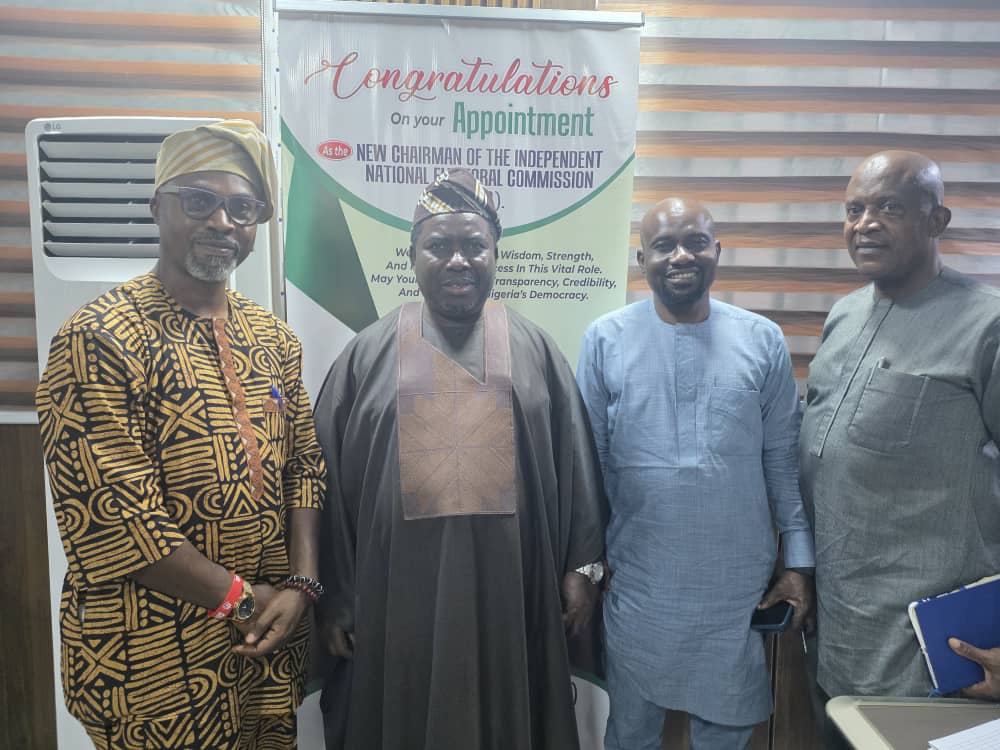
The Chairman of the Independent National Electoral Commission (INEC), Professor Joash Amupitan, SAN, has called on the Nigerian media to partner with the electoral body in restoring public confidence in the country’s electoral system ahead of the 2027 general elections.
Amupitan made the appeal on Wednesday in Abuja during a courtesy visit by members of the Executive Committee of the INEC Press Corps. The meeting marked the first formal engagement between the commission’s leadership and the specialized media group since his appointment as INEC Chairman in late 2025.
Speaking during the meeting, the INEC Chairman acknowledged that the commission currently faces what he described as a “trust deficit” among many Nigerians. According to him, rebuilding confidence in the electoral process will require the cooperation of all stakeholders, particularly the media, which plays a crucial role in informing and educating the public.
Amupitan commended journalists covering the commission for their continued professional support and urged them to help communicate the commission’s efforts to ensure transparent elections across the country.
He noted that Nigeria’s large population and complex electoral system make the role of accurate and responsible reporting even more important, especially as the country prepares for a busy electoral calendar in the coming months.
“The media has a critical role to play in shaping public perception and helping Nigerians understand the processes involved in elections,” he said, adding that effective communication will help reduce misinformation and improve public confidence in the electoral system.
The Chairman of the INEC Press Corps, Segun Ojumu, who led the delegation, also spoke during the visit. He commended Amupitan for what he described as the transparent manner in which he has been managing the affairs of the commission since assuming office.
Ojumu said Nigerian elections present a significant logistical challenge due to the country’s large population, diverse geography, and complex political environment. He stressed that collaboration between the electoral body, the media, and other stakeholders is necessary to ensure successful elections.
He assured the INEC Chairman that members of the Press Corps remain committed to providing accurate and balanced coverage of the commission’s activities.
Ojumu was accompanied on the visit by John Onah, Assistant Secretary of the INEC Press Corps, and Chux Ukwuatu, the Welfare Director of the media body.
The meeting comes at a time when INEC is intensifying preparations for a series of major elections across the country.
Nigeria is currently operating under a revised electoral framework following the enactment of the Electoral Act 2026, which introduced adjustments to the country’s election timetable and procedures.
Under the new electoral roadmap, the 2027 general elections have been scheduled to take place in two phases.
According to INEC’s timetable, the Presidential and National Assembly elections will be conducted on January 16, 2027, while the Governorship and State House of Assembly elections will follow on February 6, 2027.
Before the nationwide polls, the commission will conduct two important off-cycle governorship elections in the Southwest region.
The Ekiti State governorship election is scheduled for June 20, 2026, while the Osun State governorship election will take place on August 8, 2026.
These off-cycle elections are often viewed as key tests of the electoral body’s preparedness ahead of the national polls.
Observers and political stakeholders typically monitor such elections closely to assess the commission’s logistical capacity, transparency, and ability to manage the electoral process effectively.
Amupitan, who succeeded former INEC Chairman Professor Mahmood Yakubu, has repeatedly pledged that the commission will conduct free, fair, and inclusive elections as Nigeria approaches another critical democratic milestone.
With preparations already underway, INEC says strengthening collaboration with the media will be an important step in rebuilding public trust and ensuring that Nigerians remain confident in the credibility of the country’s electoral process.


