

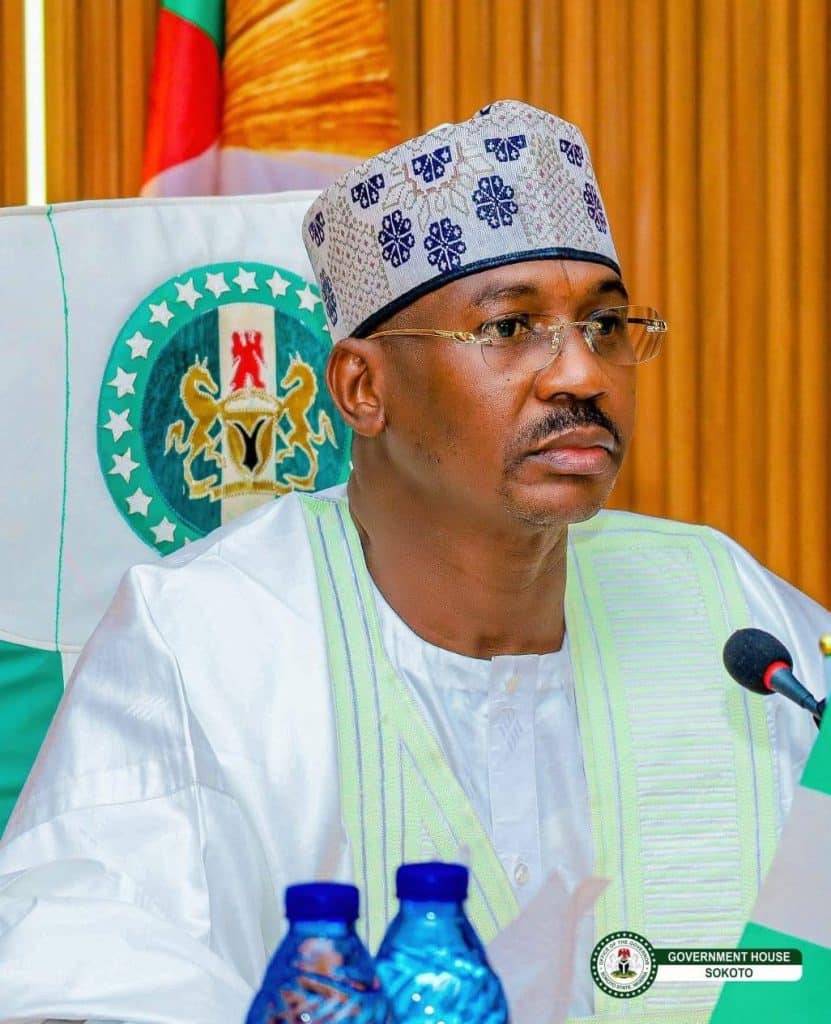
Governor Ahmad Aliyu of Sokoto has shown remarkable restraint. Otherwise, former Governor Aminu Waziri Tambuwal and his Commissioner for Finance, Hon. Abdussamad Dasuki, would be explaining their stewardship to the EFCC and ICPC rather than granting newspaper interviews to rewrite history and turn the people against the incumbent administration. There is overwhelming evidence against them.
Governor Aliyu inherited enormous financial liabilities and administrative challenges from the previous administration — a reality reinforced by the findings of the Justice Abdulkadir Muazu Commission of Inquiry, which investigated the stewardship of the Tambuwal administration. The commission’s findings painted a troubling picture of financial recklessness, questionable expenditure, unpaid obligations, abandoned projects, and misplaced priorities in the management of state resources. From outstanding gratuities and unresolved contractual liabilities to concerns about the handling of state finances, the burden left behind was substantial and undeniable.
Yet, instead of showing remorse for the condition in which they left Sokoto State, Dasuki and other principal actors of that era have continued to present themselves as defenders of workers’ welfare and fiscal responsibility — the very values undermined during their time in office.
It is therefore ironic and astonishing that Dasuki, who served as Commissioner for Finance during the Tambuwal administration, would confidently claim that Sokoto State is capable of paying a ₦150,000 minimum wage “if resources are properly managed.”
One would expect greater caution from someone who played a key role in the mismanagement of the state’s finances for eight years. The same administration left behind huge debts, unpaid gratuities, and unresolved liabilities, including over ₦14 billion in gratuities and retirement benefits owed to retired civil servants between 2015 and 2023, along with numerous unanswered questions about public fund management. And, sadly, there were zero projects to show for it.
With elections approaching, it has become politically convenient for figures like Dasuki to resort to populist rhetoric and emotionally appealing promises designed to attract public sympathy. Unfortunately, in doing so, he appears to have forgotten — or deliberately ignored — the significant role he played in the economic difficulties he left Sokoto State in. It is easy to make extravagant claims about what the Governor Aliyu administration “should” be doing, but far more difficult to explain why those same prescriptions were not implemented when he was in charge of the state’s finances.
Hon. Dasuki ought to understand better than most that governance is more serious than making headline-grabbing comments intended to provoke public anger or incite sentiment against an administration that is currently working to repair, stabilize, and recover from nearly eight years of financial damage, unpaid obligations, and administrative setbacks inherited from the previous government.
The truth remains that Governor Aliyu inherited a financially burdened state but has shown far more prudence, discipline, and responsibility in managing Sokoto State’s resources than Dasuki and his mentor, who are now attempting to lecture him on governance. While the Tambuwal administration struggled to meet its financial obligations to retirees and workers despite years of federal allocations and constant borrowing from commercial banks, the current administration is not only paying salaries and implementing the ₦70,000 minimum wage, but is also settling inherited debts and restoring public confidence in the government’s capacity to meet its obligations to both workers and contractors.
For Hon. Dasuki to now position himself as a defender of workers’ welfare is therefore deeply contradictory.
Just in case Dasuki has forgotten, it is important to remind him that for years, retirees suffered despite repeated assurances that all entitlements would be settled. They were never paid. Governor Dr. Ahmad Aliyu Sokoto has had to confront these inherited burdens head-on. His administration established a Verification and Payment Committee under the Office of the State Accountant General, which confirmed the liability, and he has since commenced payment. The government is also setting aside over ₦300 million monthly to ensure that retirees are paid systematically and without delay.
So, who loves the people more? Is it the Aminu Tambuwal/Abdussamad Dasuki administration, which delayed monthly salaries and never paid gratuities, or Governor Aliyu, who pays monthly salaries on or before the 20th of each month and consistently pays inherited gratuities to retired civil servants?
In clear contrast to the previous administration, Governor Aliyu has demonstrated stronger fiscal discipline, better prioritization of resources, and a more people-centered approach to governance. While the Tambuwal administration left behind debts, unpaid entitlements, and financial controversies, the current administration is steadily clearing inherited liabilities while simultaneously meeting ongoing obligations to workers and pensioners.
As the popular saying goes, “If you do not want lizards visiting your home, do not keep maggot-infested wood around it.” That is precisely the situation Dasuki has created for himself through his recent comments. His attempt to present himself as a champion of fiscal prudence and “a friend of workers” has reopened scrutiny of his poor record. Civil servants still remember deductions made from their salaries for loan repayments to institutions such as Shap-Shap and Credit Direct that were allegedly not remitted, leaving workers trapped in financial distress despite consistent deductions. The consequences were devastating for many workers, who suddenly found themselves trapped in multiple financial liabilities, embarrassed before creditors, and subjected to unnecessary hardship despite having deductions consistently taken from their salaries.
Furthermore, during Hon. Abdussamad Dasuki’s tenure as Commissioner for Finance, union dues belonging to university staff, college lecturers, polytechnic workers, and other labour unions were reportedly deducted from workers’ salaries without proper remittance to the respective unions. These allegations further deepened concerns over transparency and accountability in the handling of workers’ funds under the previous administration.
It is also important to note that the current administration discontinued the controversial salary management arrangement previously handled by a Lagos-based private company and returned payroll administration to the Ministry of Finance. Under the previous system, many workers reportedly faced delays and difficulties resolving salary-related complaints. The restoration of payroll management to the ministry has improved accountability, efficiency, and direct access for civil servants.
These are not issues that can simply be brushed aside. Before attempting to lecture others on fiscal responsibility or accuse the current administration of poor resource management, Nigerians — particularly civil servants affected by those actions — deserve clear answers regarding how those deductions were handled under his watch and why workers were made to suffer the consequences of his financial mismanagement.
Yes, federal allocations have increased following subsidy removal and exchange rate reforms. But increased allocations do not translate into unlimited spending capacity. Responsible governance requires balancing recurrent expenditure with inherited liabilities, infrastructure needs, healthcare, education funding, security challenges, and pension obligations — and this is what the Aliyu administration is doing.
What Dasuki, the Man Friday of Aminu Tambuwal, deliberately failed to explain to the people is that genuine governance is not about granting interviews. While paying a ₦150,000 minimum wage may sound attractive in an election year, no responsible government can ignore sustainability, existing obligations, and long-term fiscal stability. Sokoto State still has responsibilities in healthcare, education, infrastructure, security, agriculture, pensions, and debt obligations. A government that recklessly commits virtually all its revenues to salaries alone would ultimately cripple development and create even deeper economic problems for future generations. Responsible leadership is therefore not about making unrealistic promises, but about balancing workers’ welfare with the broader developmental needs of the state.
The current administration has already demonstrated its commitment to workers’ welfare by being the first to implement the new ₦70,000 minimum wage for state civil servants, local government workers, and teachers, despite the severe financial pressures inherited from the previous administration.
Now, this is the part that former Governor Aminu Waziri Tambuwal and his allies would never be comfortable hearing: despite inheriting a financially bankrupt state, Governor Aliyu has proved through prudent management, accountability, and people-focused governance that government can still deliver meaningful development for the people of Sokoto State. More importantly, Governor Aliyu is not merely spending resources — he is managing them more responsibly than the previous administration. Unlike the Tambuwal government, this administration has not resorted to borrowing from commercial banks to finance recurrent expenditure.
Despite inherited liabilities, the Governor Aliyu administration continues to make steady progress. It has been making monthly provisions toward pension and gratuity payments, with an initial ₦4 billion approval followed by about ₦800 million in monthly allocations to clear backlogs. Salaries remain consistent, and contractual obligations are being met without destabilizing the wage structure.
In the area of infrastructure, several road rehabilitation and construction projects have been completed, while several others are ongoing across urban and rural communities, aimed at improving connectivity, boosting commerce, and easing transportation challenges that previously hindered economic activities in the state. It is important to stress that Governor Aliyu has completed many projects, especially in water, housing estates, and roads, that were abandoned by the Aminu Tambuwal administration.
Security support has also remained a key priority, with the procurement and distribution of over 180 operational vehicles and thousands of motorcycles as logistical support to security agencies to enhance mobility and response capacity in tackling banditry and rural insecurity. The government has also been prompt in paying allowances to security agencies fighting terrorists. A military base has also been constructed at Illela. The government is also supporting community-based security initiatives to tackle banditry and rural insecurity threatening livelihoods across many local government areas.
In education and healthcare, reforms are increasingly evident. Schools are being renovated, learning materials provided, examination fees covered, and efforts intensified to reduce the number of out-of-school children. Health facilities are being upgraded, medical equipment supplied, access to essential drugs improved, and policies implemented to strengthen healthcare delivery for ordinary citizens, especially in rural communities that suffered years of neglect under Aminu Tambuwal.
Infrastructure, water supply, and agriculture have also witnessed renewed government attention under Governor Aliyu. Roads are being rehabilitated, access to clean water expanded, and agricultural support provided through the provision of inputs and empowerment programmes to boost food production and improve livelihoods.
These achievements are significant because they are being delivered while simultaneously paying inherited debts, settling gratuities, and managing the financial consequences of years of poor fiscal decisions by Abdussamad Dasuki and his mentor, Aminu Tambuwal.
Governance is not about making sensational headlines or offering unrealistic promises to gain political support. It is about making difficult decisions that protect the long-term financial stability of the state.
The people of Sokoto State can clearly distinguish between those attempting to rewrite their inglorious history and a government that is currently working to fix the years of stagnation caused by a lack of leadership.
Abdussamad Dasuki would do well to reflect on the words of LeCrae: “Don’t use time and words carelessly — neither can be retrieved.” Ironically, it is his own careless and politically motivated remarks that have once again drawn public attention to his record in office and reopened painful conversations about financial mismanagement, unpaid workers’ entitlements, and the questionable handling of public funds that characterized the administration he served. Had he restrained himself from cheap political talk and populist grandstanding, many of those misdeeds and controversies would perhaps have remained buried in silence.


tuidwb