

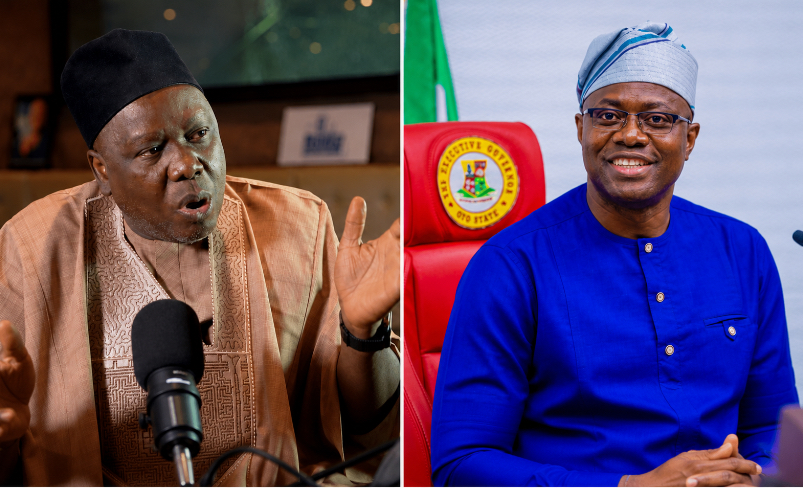
Former presidential spokesperson and political commentator, Daniel Bwala, has accused Oyo State Governor, Seyi Makinde, of politicising the recent abduction incident in the state in an attempt to remain politically relevant.
Bwala made the allegation while commenting on the security situation and the political reactions surrounding the reported abduction in Oyo State.
According to him, the handling of the incident and the subsequent public discourse have become entangled with political interests, rather than being treated solely as a serious security concern requiring a coordinated response.
Bwala argued that security challenges should not be exploited for political advantage, stressing that the priority of political leaders should be the protection of citizens and the swift resolution of security threats.
He alleged that Makinde’s approach to the issue was politically motivated, suggesting that the governor was using the incident to position himself in the national political space and sustain public attention.
The statement has sparked debate, particularly amid growing concerns over insecurity and the responsibilities of state and federal authorities in protecting citizens.
The controversy also comes against the backdrop of increasing political realignments ahead of the 2027 general elections, with prominent politicians and political commentators trading accusations over the use of national and local issues for political purposes.
While Bwala criticised Makinde’s handling of the matter, the Oyo State Government has continued to face pressure over the security situation in the state, with residents expecting authorities to strengthen measures to prevent abductions and other criminal activities.
The allegation by Bwala is expected to fuel further debate over the role of politicians in addressing security challenges and whether public reactions to incidents of abduction are driven by genuine concern for victims or political calculations.
Makinde’s supporters and other political observers may, however, dispute Bwala’s characterisation of the governor’s actions, arguing that raising concerns about insecurity is part of a governor’s responsibility to protect residents and draw attention to security challenges affecting the state.
The controversy highlights the increasingly political nature of security discussions in Nigeria, where incidents of kidnapping and other violent crimes frequently trigger intense exchanges between political actors.


