

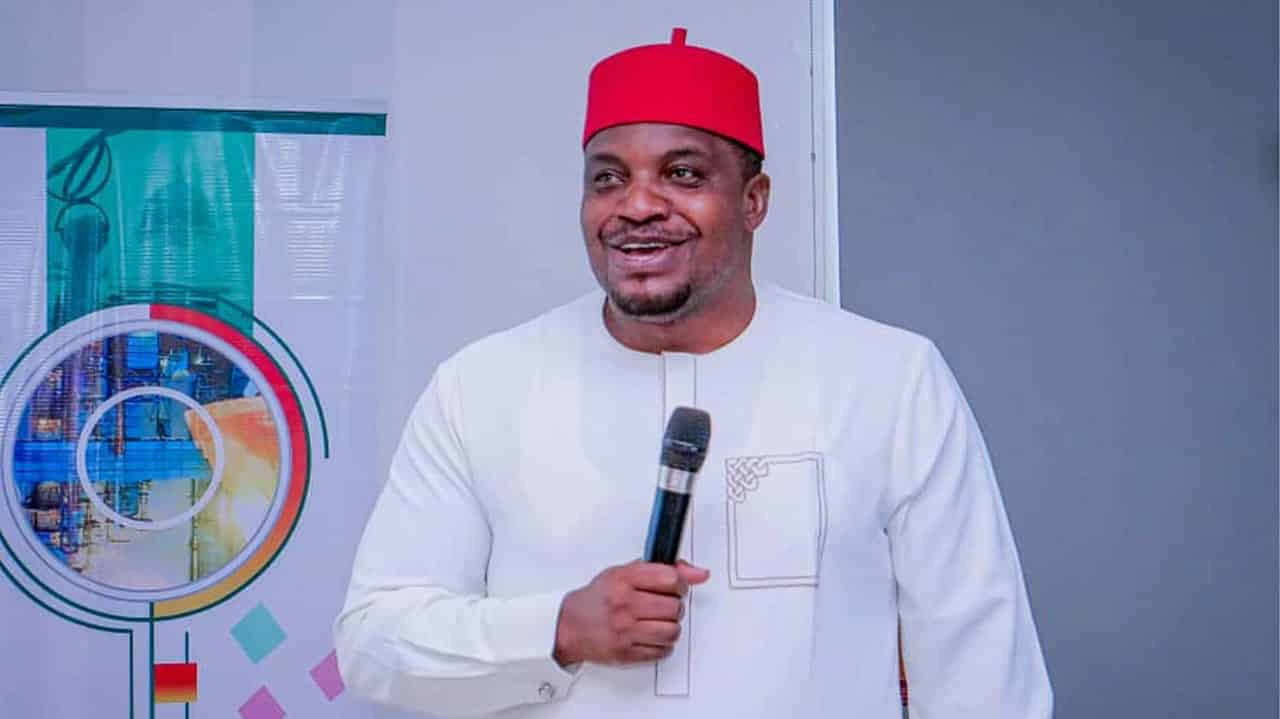
Labour Party presidential candidate for the 2027 general election, Dr. Chibuzo Okereke, has formally accepted his nomination and unveiled a sweeping reform agenda aimed at restoring public confidence in government, strengthening institutions, tackling insecurity and repositioning Nigeria for sustainable development.
In his acceptance letter on Thursday, Okereke said his administration would be guided by a “Nigerians First” philosophy anchored on human capital development, social justice, economic growth and accountable governance. He argued that successive governments had focused more on preserving political power than improving the welfare of citizens, insisting that national prosperity can only be achieved when Nigerians themselves prosper.
The Labour Party flag bearer thanked party leaders, members and supporters for entrusting him with the presidential ticket, while paying tribute to the party’s National Leader and Abia State Governor, Dr. Alex Otti, whom he described as a model of people-centred leadership. He also acknowledged the support of National Chairman Senator Nenadi Usman, the National Working Committee, the National Executive Council, the Nigeria Labour Congress and the Trade Union Congress.
Accepting the nomination, Okereke said Nigeria was facing one of its most difficult periods since the return to democracy in 1999, citing rising living costs, insecurity, unemployment, declining purchasing power, infrastructure deficits, poor healthcare outcomes and growing public distrust in government institutions.
According to him, the Labour Party has developed a national recovery blueprint focused on restoring security, stabilising the economy, expanding access to quality education and healthcare, reforming public institutions and promoting national unity.
On security, he pledged to rebuild the nation’s military and strengthen intelligence gathering to restore confidence in the government’s ability to protect lives and property across the country. Economically, he promised policies aimed at boosting food security, addressing power shortages, encouraging investment and supporting enterprise growth. He also advocated the decentralisation of the national power grid, arguing that states should play a more active role in electricity generation and distribution.
Okereke said investment in education and human capital development would form a cornerstone of his administration, with greater emphasis on technical skills, digital literacy, research and innovation. He maintained that Nigeria cannot compete globally while millions of children remain out of school and educational institutions continue to deteriorate.
The Labour Party candidate also proposed extensive institutional reforms, including the introduction of zero-based budgeting, stricter fiscal responsibility measures, greater transparency in procurement processes and merit-based recruitment across government agencies. He promised that vacancies in ministries, departments and agencies would be publicly advertised and filled through transparent processes.
Among his most notable proposals were plans to repeal the Universal Basic Education Commission (UBEC) Act and the National Primary Health Care Development Agency (NPHCDA) Act, transferring their assets and resources directly to local governments. He argued that basic education and primary healthcare services would be more effectively managed at the grassroots level.
Okereke further proposed making the National Youth Service Corps (NYSC) optional for most graduates, except those in selected STEM and strategic disciplines. Under the plan, other graduates would undertake a three-month community development programme before receiving their discharge certificates.
A central theme of his speech was the slogan “Believe Again,” which he described as a call for national renewal at a time when many Nigerians have lost faith in government institutions and the country’s future. Addressing soldiers, young professionals, farmers, pensioners, women, academics, entrepreneurs and voters, he urged citizens to regain confidence in the possibility of a better Nigeria.
He said his administration would place governance above politics, service above power and national development above partisan interests, stressing that government exists to serve the people rather than political elites.
With political activities ahead of the 2027 general election gradually gaining momentum, Okereke’s acceptance speech offers a glimpse into a campaign expected to focus heavily on governance reforms, decentralisation, human capital development and rebuilding public trust in government.


