

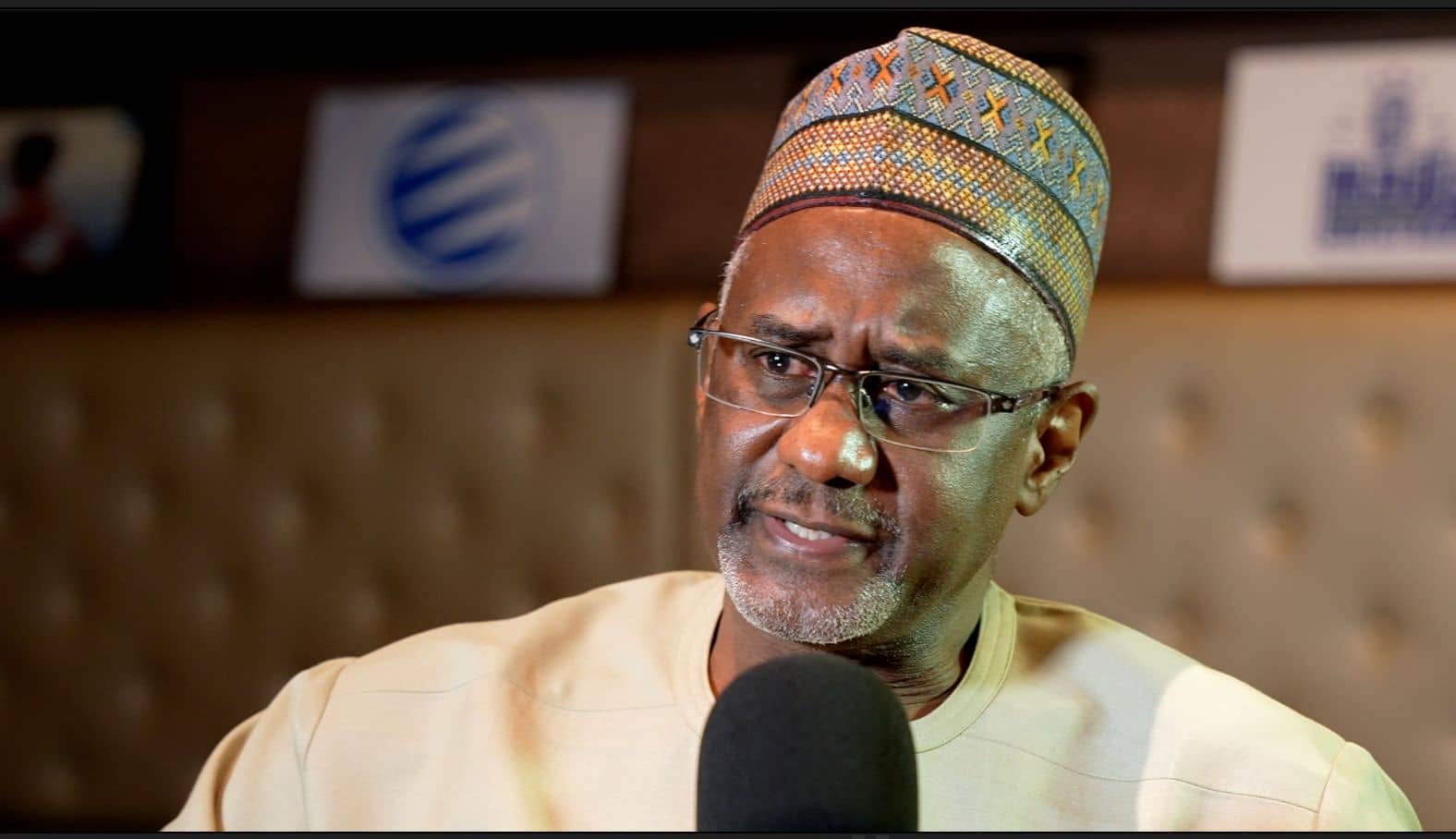
Professor Usman Yusuf has reacted to the newly constituted All Progressives Congress presidential campaign council ahead of the 2027 general election, wishing the team “bad luck” as it prepares to convince Nigerians to return President Bola Tinubu for a second term.
Speaking on Naija Unfiltered, a Symfoni podcast, Yusuf described the campaign council, headed by former Zamfara State Governor and Senator Abdulaziz Yari as Director General, as an assortment of “the good, the bad and the ugly.”
The former Executive Secretary of the National Health Insurance Scheme questioned the credibility of some members of the council and said Nigerians were waiting to see how they would defend the Tinubu administration before voters across the country.
According to him, President Tinubu would not embark on the kind of nationwide campaign associated with former President Muhammadu Buhari, arguing that the APC would instead rely heavily on politicians, clerics and other influential figures to sell the administration to Nigerians.
“President Tinubu is not going to do any campaign, the usual campaign. He’s not,” Yusuf said.
He argued that the President lacked the strength for an extensive nationwide campaign and claimed that Tinubu could not face Nigerians directly over the challenges confronting the country.
“They have contracted politicians, clerics and others to go around the country and sell this mess again to us,” he said.
Yusuf Questions Yari’s Ability to Deliver Northern Votes for Tinubu
While acknowledging that the appointment of Senator Yari as Director General of the campaign council could be considered a strategic political move, Yusuf questioned what the former Zamfara governor would tell voters in Northern Nigeria.
“I can imagine President Tinubu saying to Yari, ‘Go and talk to your people, go and get the vote,’” he said.
However, Yusuf argued that Yari was now on what he described as the wrong side of the people, insisting that he doubted the former governor’s ability to convince Northerners to support Tinubu again in 2027.
The professor recalled that the North, particularly the predominantly Muslim North, contributed significantly to Tinubu’s electoral victory in 2023, claiming that about 62 per cent of the President’s votes came from the region.
He said voters would now assess what they had gained from the administration and compare developments in states that supported Tinubu with those in Lagos, the President’s political base.
“Lagos State, his own state, did not vote for him. Katsina, my state, voted for him. So people will compare: What did Lagos get? What did Katsina get? Why should we vote for you again?”
According to Yusuf, the political calculation ahead of 2027 would be driven largely by the economic realities confronting ordinary Nigerians.
“Politics is local and politics is on the pocketbook,” he said, pointing to hardship, poverty and worsening insecurity as issues voters would consider.
Yusuf also challenged Yari to explain the security situation in Zamfara, asking what message the former governor would take to residents of the state.
“What are you going to tell the people of Zamfara? Is security in Zamfara better now than before you guys came?”
He said Zamfara remained personally significant to him, having attended Government Secondary School, Gusau, and recalled that the state he knew while growing up was far more peaceful than the situation he said now exists.
According to Yusuf, he often feels emotional whenever he visits the state because of the dramatic changes he has witnessed over the years.
On his recent silence over national issues, the professor described it as “strategic silence,” saying he had deliberately stepped back to watch events unfold and see how the government would respond to the challenges facing Nigerians.
“Just see how everything unfolds, how they’re going to do what they are going to do, because they’re all flailing. They’re clueless,” he said.
Yusuf said he was waiting to hear the government’s message to Nigerians, rather than what he described as propaganda from Abuja.
He criticised political leaders and government officials for celebrating economic figures such as GDP growth, savings and other indicators which, according to him, have little connection with the everyday realities of ordinary Nigerians.
“Abuja politicians and tax collectors talking numbers that has no connection at all to the lives of our people. None,” he said.
Yusuf also questioned the size of the APC presidential campaign council, which he said had more than 100 members, arguing that the presence of numerous governors, lawmakers and political figures would not necessarily translate into electoral support.
He pointed to recent political developments in Osun State as a warning sign for the APC, arguing that political structures and the influence of office holders alone may not be enough to secure the confidence of voters.
“Shouldn’t Osun teach them a lesson?” he asked.
Yusuf said the APC might attempt to present the development in Osun as evidence of Tinubu’s democratic credentials, arguing that the government could claim the President allowed the process to proceed peacefully.
However, he accused the administration of attempting to control political narratives.
“They are masters of spinning. But there’s so much you can spin. You over-spin.”
According to him, the political development in Osun should serve as a “pointer” and an “indicator” as the APC prepares for the 2027 election.
“So Osun is a pointer, is an indicator. We are waiting. Come to Osun. We’re waiting. So let them tell their story. People are patiently waiting for them.”
Yusuf ended by insisting that Nigerians were waiting for the APC campaign council to take its message across the country and explain why voters should return Tinubu for another term in office.
“We are waiting for the story,” he said. “People are patiently waiting for them.”


