

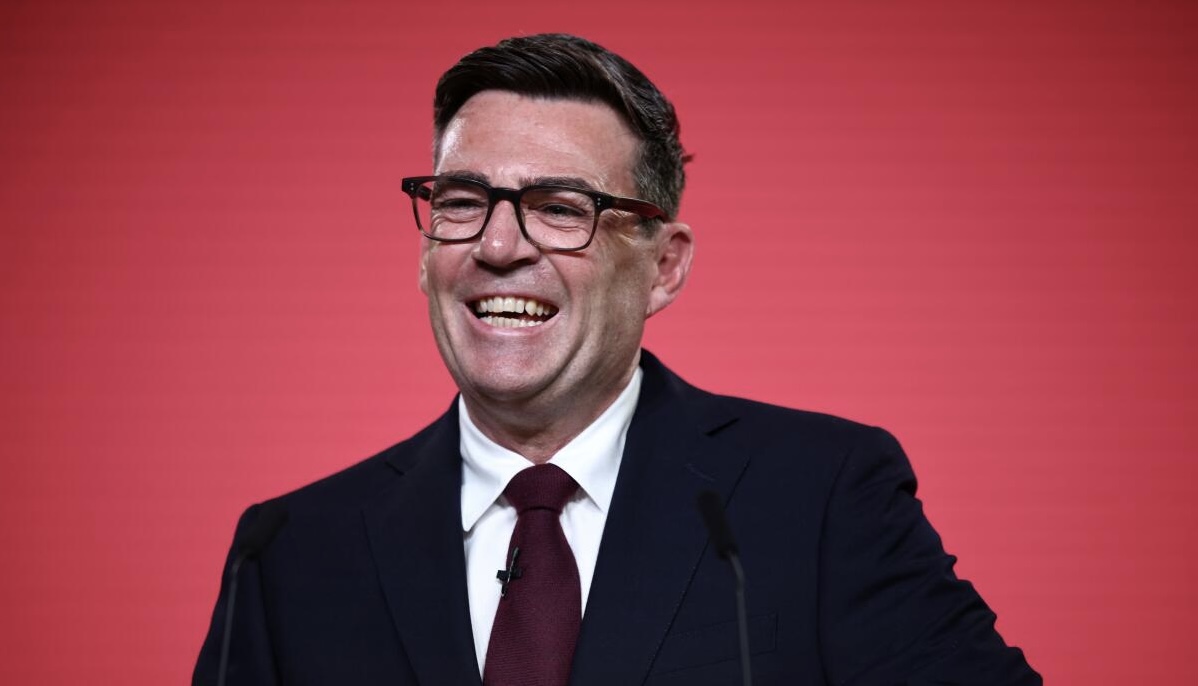
Andy Burnham is set to become Britain’s seventh prime minister in a decade on Monday, inheriting a government facing a sluggish economy, rising borrowing costs, a growing welfare bill and mounting pressure over irregular migration.
The former mayor of Greater Manchester will take over from Keir Starmer, who resigned as prime minister and Labour Party leader last month following a series of political scandals, policy U-turns and setbacks.
Burnham will formally become prime minister after Starmer tenders his resignation to King Charles III at Buckingham Palace. He will then meet the King before delivering his first speech outside 10 Downing Street.
His team said the new prime minister will outline priorities focused on restoring public confidence in government and easing the pressure of the cost-of-living crisis. Economic growth and the devolution of power to regional communities are also expected to feature prominently.
An announcement on Burnham’s senior cabinet appointments is expected on Monday, with particular attention on who will succeed Rachel Reeves as finance minister.
Burnham, widely known as the “King of the North”, has been brought back into national politics after serving as mayor of Greater Manchester. Labour MPs reportedly see him as the party’s strongest option for containing the growing influence of Nigel Farage’s anti-immigration Reform UK.
Burnham Faces Tough Road Ahead
Deputy Labour leader Lucy Powell said Burnham’s experience governing outside London had given him a clearer understanding of the “bigger, bolder measures” needed to deliver Labour’s election promises.
Among his immediate challenges are weak economic growth, high government borrowing costs, rising welfare spending and the continued arrival of irregular migrants in small boats across the English Channel—an issue that has strengthened support for Reform UK.
The prime minister will also face pressure from unpredictable energy prices linked to global tensions and an uncertain international environment under US President Donald Trump.
Powell said Burnham wanted to radically reform what he described as an over-centralised political system and an economic model that had prioritised vested interests over ordinary citizens.
Burnham has pledged to improve economic security, housing affordability and opportunities for young people while giving greater power to communities outside London.
However, the new prime minister has limited room for manoeuvre. He returned to Parliament only four weeks ago and has inherited an economy constrained by slow growth, high public debt and strict fiscal rules requiring the government to balance spending with tax revenues.
Burnham previously served as an MP from 2001 to 2017 and held ministerial positions under former Labour prime ministers Tony Blair and Gordon Brown. Since becoming mayor of Greater Manchester, he has cultivated a more informal, populist political image supported by an active social media presence.
With the next general election expected in 2029 and Reform UK performing strongly in opinion polls, Burnham has roughly three years to deliver results and rebuild Labour’s popularity.
Addressing supporters on Friday, Burnham described his return to national leadership as Labour’s “last chance” to get things right.
His rapid rise to the leadership has nevertheless prompted questions over how quickly he can implement his ambitious agenda.
In his first major policy move, Burnham scrapped Starmer’s controversial nationwide digital ID scheme, which was estimated to cost £1.8 billion over three years. His spokesperson said the resources would instead be redirected to areas of greater need, including tackling the cost-of-living crisis.


Theo mình thì thoptv app là nơi giải trí online khá đáng thử hiện nay. TONY09-03