

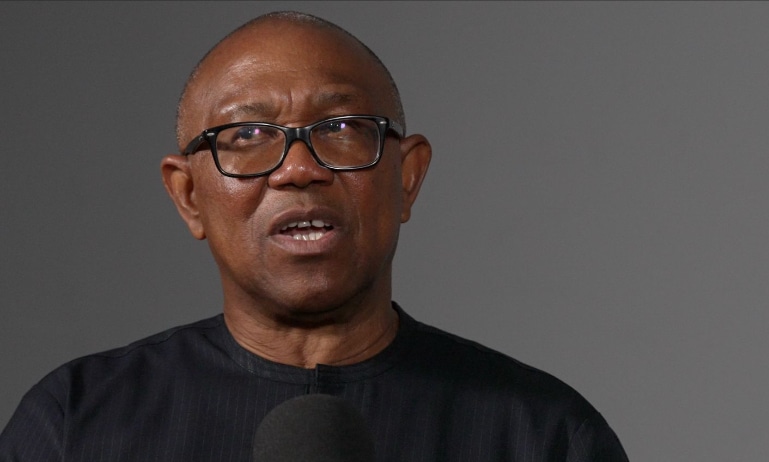
Former presidential candidate Peter Obi has given a detailed critique of Nigeria’s economy, insisting that the country’s main challenge is not borrowing, but how borrowed money is spent and managed.
Speaking on Naija Unfiltered, a Symfoni podcast, Obi said borrowing is a normal part of economic development across the world, but it only works when directed toward productive investment. He explained that countries like Japan and Singapore carry higher debt levels than Nigeria but still record strong economic performance because their borrowed funds are channeled into infrastructure, education, and productive sectors that generate returns.
According to him, Nigeria’s situation is different because loans are often used for consumption rather than investment, making repayment difficult and economic impact minimal. He argued that this approach leaves the country with rising debt but little visible development.
Obi also raised concerns about Nigeria’s growing debt profile, noting that despite increased government revenue from taxes and the removal of fuel subsidies, citizens are not seeing corresponding improvements in living conditions or public services. He said this raises serious questions about accountability and how public funds are being managed.
He further criticized the implementation of national budgets, describing a situation where multiple budgets appear to be running at the same time while capital projects remain underfunded and contractors are left unpaid. According to him, this reflects deeper structural and financial inefficiencies within government operations.
Obi questioned the accuracy of official inflation figures, arguing that they do not reflect the real cost of living experienced by ordinary Nigerians. He cited examples from Abuja, where transportation costs have reportedly risen from about ₦700 to nearly ₦3,000, while food prices in many places have doubled. He said these realities show that Nigerians are facing far higher inflation than reported in official data.
He explained that key indicators such as food, housing, and transport costs suggest a much harsher economic environment than statistics suggest. He added that many workers have not received salary adjustments to match rising expenses, forcing families to struggle daily to survive.
Obi also criticized government policies on food supply, particularly the importation of food items to control prices. While acknowledging that such measures may reduce costs temporarily, he warned that they negatively affect local farmers and discourage domestic agricultural production. He said this weakens Nigeria’s long-term food security and economic independence.
Describing the overall situation, Obi referred to Nigeria’s economy as being in a “financial and fiscal mess,” pointing to weak coordination, poor transparency, and inefficiency in public spending. He expressed concern that large budget allocations in sectors like health and education do not always translate into real impact on the ground.
He further called for a shift toward transparency, discipline in public finance, and investment-driven borrowing. According to him, borrowed funds must be tied strictly to projects that generate economic value and improve citizens’ quality of life. He stressed that Nigeria’s economic recovery depends on doing the right things consistently and ensuring that public resources are properly managed.


You really know how to connect with your readers.
I like how you presented both sides of the argument fairly.
I love how practical and realistic your tips are.