

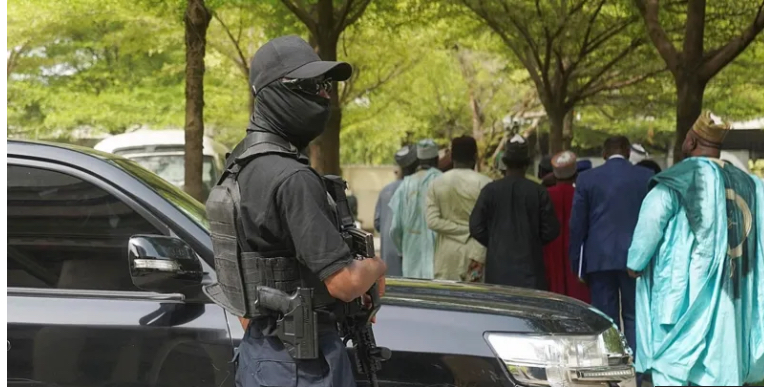
Journalists were temporarily denied access to proceedings in the ongoing trial of Nigerian military officers accused of plotting to overthrow the government, as authorities cited national security concerns.
The court martial, which involves about three dozen officers, opened on Friday at a military facility in Abuja. The defendants appeared before newly inaugurated judges, marking the formal start of the high-profile case.
A military spokesperson confirmed on Monday that the next hearing, scheduled for May 8, will also be conducted behind closed doors, with no media presence allowed.
The restriction, according to officials, is due to the overcrowding of the court house, and the sensitivity of the case which involve an attempted coup against the administration of Bola Ahmed Tinubu. Authorities say open proceedings could expose confidential military operations, intelligence methods, and identities of key personnel.
The alleged coup was reportedly planned for October 1, 2025, Nigeria’s Independence Day. A national parade expected to be attended by the president was abruptly cancelled at the time, raising suspicions, although the government initially denied any knowledge of a plot.
In January, however, the military announced that several officers would face court martial for their alleged involvement in plans to overthrow the government.
Meanwhile, a separate but related case is ongoing at the Federal High Court in Abuja, where six civilians are facing charges of treason and terrorism linked to the same plot. The suspects include a retired major general and a serving police inspector. All have pleaded not guilty.
Prosecutors allege in the charge sheet that the defendants “conspired with one another to levy war against the state to overawe the president of the Federal Republic.”
Another suspect, former Bayelsa State governor Timipre Sylva, has been accused of helping to conceal the plot and is currently at large.
Nigeria, Africa’s most populous country, has a history of military interventions in governance following independence from the United Kingdom in 1960. However, democratic rule has remained uninterrupted since 1999.
Following initial reports of the coup attempt, President Tinubu carried out a reshuffle of the country’s top military leadership, a move widely interpreted as an effort to stabilise the armed forces.
While the closed-door trial has raised concerns about transparency, authorities insist the restrictions are necessary to protect national security and ensure the integrity of the proceedings.
The case is expected to continue in the coming weeks as both military and civilian courts handle different aspects of the alleged coup plot.


